
LESSON 12 OF 12 · Baking Basics
Knead enriched dough
Learn how buttery bread dough changes from sticky and rough to smooth and elastic.
YOUR KITCHEN WIN
Recognize gluten development in a soft dough and use a gentle windowpane check.
Gather: The measured ingredients from Stand Mixer Brioche Bread, a suitable stand mixer with dough hook, a bowl scraper, and a covered bowl.
The lesson covers mixing and checking only. Rising, chilling, shaping, and baking require additional time. Do not taste raw dough.
Let’s do it, step by step
Illustrative AI-generated step photos. Follow the written instructions for measurements and technique.
Start with the recipe
Follow the brioche recipe’s ingredient weights, temperatures, and order of addition. Mix until no dry flour remains. The dough may look sticky and rough initially; avoid adding extra flour just to make it easier to handle.
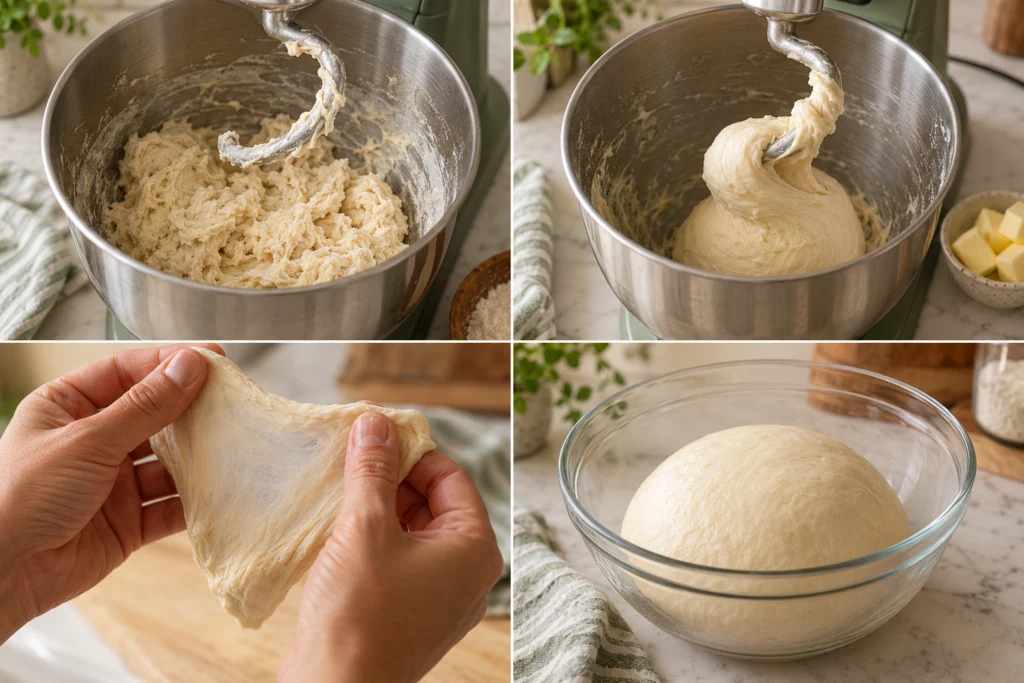
Mix the ingredients into a rough dough. Knead and watch texture
Use your mixer’s recommended dough speed and capacity. Follow the recipe for adding softened butter gradually. Stop and unplug before scraping or touching the hook. Look for the dough to become more cohesive, elastic, and smooth; stop if the machine strains or the dough gets very warm.
Develop a cohesive dough using the recommended mixer speed. Check a small windowpane
With the mixer stopped, take a small piece of dough and let it relax briefly. Stretch it gently between your fingers. Well-developed white-flour dough can stretch into a thin, translucent membrane. If it tears immediately, rest briefly and continue kneading in short intervals before checking again.
Stretch a small rested sample for the windowpane check. Cover and follow the rise
Gather the soft dough into the recipe’s bowl and cover so the surface does not dry out. Follow its proofing and chilling schedule before shaping and baking. A smooth dough ball is the end of this lesson, not the end of the recipe.
Cover the smooth dough and follow the recipe’s rise.
SMALL FIXES, BETTER RESULTS
If it doesn’t go to plan
The dough is sticky?
Rich dough is often tacky. Check your weights, use a scraper, and allow time for development rather than repeatedly adding flour.
The dough tears in the test?
Let the sample relax before stretching again. If it still tears, knead a little longer within your mixer’s limits, then check again. Very warm dough may need a short covered rest.
One skill learned. One step forward.
Try the exercise, then mark this lesson complete when you feel ready.