
LESSON 03 OF 12 · Flavor & Seasoning
Season and taste
Make small changes that bring a dish into balance.
YOUR KITCHEN WIN
Recognize when a dish needs salt, brightness, or simply a little patience.
Gather: A small bowl of cooked soup, salt, lemon juice, and clean tasting spoons.
Let’s do it, step by step
Illustrative AI-generated step photos. Follow the written instructions for measurements and technique.
Taste a baseline
Let a spoonful cool enough to taste comfortably. Notice whether the flavor is clear, flat, too salty, or too sharp. Only taste ingredients that are safe to eat at that stage.
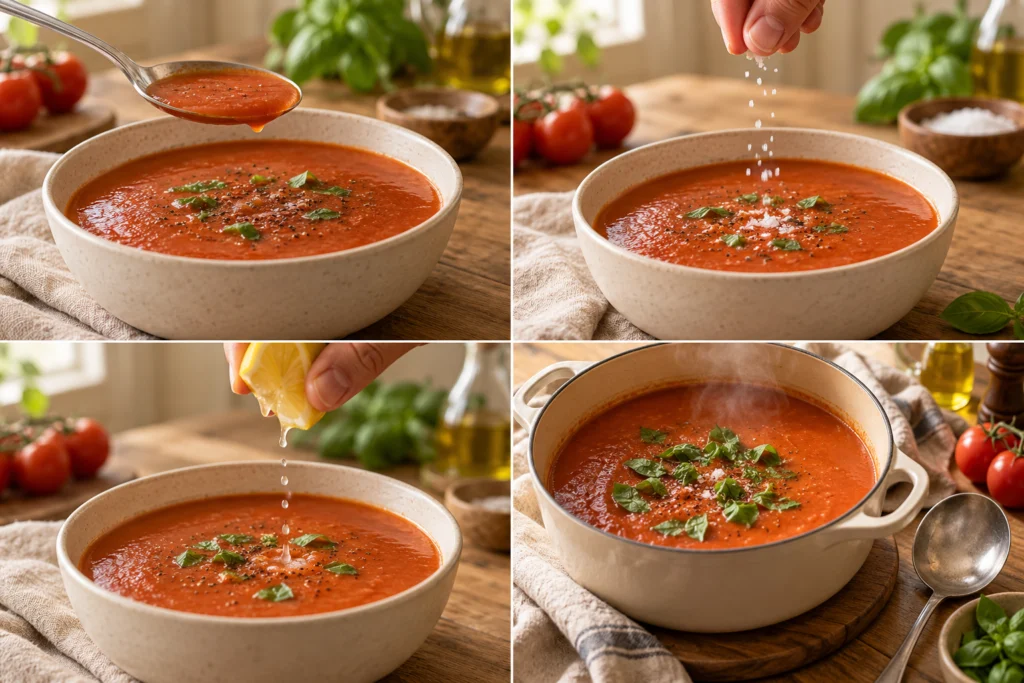
Taste a small spoonful once it is cool enough. Add a little, then stir
For the practice bowl, add a small pinch of salt. Stir thoroughly and taste again with a clean spoon. Different salts have different crystal sizes, so the same volume may not taste equally salty.
Add a little salt, stir, and taste again. Try brightness
If the soup tastes heavy or dull but already has enough salt, try a few drops of lemon juice. Stir and compare. Add gradually: acidity should lift the flavor, not overwhelm it.
Try a few drops of lemon for brightness. Check again at the end
Reducing a sauce concentrates salt. Broth, cheese, and other ingredients may already be salty. Make the final adjustment after simmering and before serving.
Check the seasoning again after simmering.
SMALL FIXES, BETTER RESULTS
If it doesn’t go to plan
Too salty?
Dilute with unsalted liquid or add more unsalted ingredients when the recipe allows. Lemon does not remove salt.
Added several seasonings at once?
Change one thing at a time so you can tell what helped.
One skill learned. One step forward.
Try the exercise, then mark this lesson complete when you feel ready.