Compare two verified six-quart models by inner-pot design, safe filling, steam release and cleanup.
Page updated November 2026
Research-based recommendations; no hands-on testing.
More about these picks
HomeCookPicks Editorial Team · Research checked November 5, 2026.
Research-based recommendations, not hands-on tests. We have not measured cooking speed, tenderness, temperature accuracy, noise or long-term reliability.
As an Amazon Associate, HomeCookPicks earns from qualifying purchases. Shopping links below are affiliate links.
A pressure cooker earns its counter space when it fits meals you already want to make. Before comparing button counts, write down three dinners you would actually cook in it. Then check the minimum batch, release method, inner pot and cleanup. Those decisions matter more than whether a box calls the machine seven-in-one or ten-in-one.
Our Picks at a Glance
This comparison covers two exact 6-quart US-market models. Match the model number and finish rather than relying on a familiar brand name. Nominal capacity is not the amount you can safely pressure cook. Check the marked working limits, including the lower limit for expanding foods.
Swipe sideways on smaller screens to see the full comparison.
Neither model is an air fryer. If crisping is your main goal, compare a different appliance rather than buying pressure-cooking functions you will rarely use.
Choose the Pro if the inner pot is what you notice first. Its built-in handles help with lifting and keep the pot in place for sautéing. It also offers five favorite-program buttons, a progress display and a steam-release cover. Those are tangible conveniences for someone who expects to use the cooker regularly.
What matters in daily use
A handled pot can be an appealing upgrade if you often sauté before pressure cooking or move the finished dish to a serving area. Treat it as hot cookware nonetheless. The extra modes are useful only if you have a plan for them; they are not evidence that everyday pressure-cooked meals will taste better.
Why it makes the shortlist
The physical pot design addresses a real handling task, and favorites can suit repeat meals.
The compromise
There is a fuller control panel to learn. Do not pay for functions simply because they increase the number on the box.
Keep the names separate: this is the black 6QT Pro, 112-0123-01, not Pro Plus, Pro Crisp or an 8QT model. Use the correct replacement pot and sealing parts for this model.
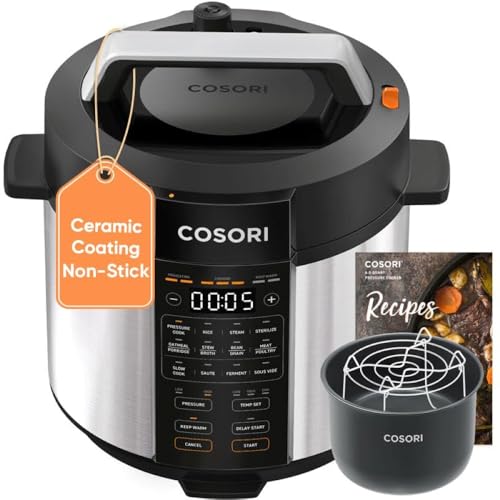
Consider the COSORI if you prefer a ceramic-coated cooking surface to the Pro’s stainless inner pot. It pairs a button-based panel with a cooking-stage display. The exact US model is CMC-CO601-SUS; the Amazon finish is labeled Silver Pressure Cooker.
What matters in daily use
Think about the utensils and washing routine you already use. A coated pot may suit someone comfortable caring for nonstick cookware. A stainless pot may suit someone who would rather avoid a coating. Neither preference proves which appliance is faster to wash, and we have not timed cleanup.
Choose the controls you can read comfortably, and check that the pot and lid have a convenient place to dry. There is little benefit in buying a larger collection of presets if you expect to repeat a few simple meals.
Why it makes the shortlist
It provides a clear coated-pot alternative with straightforward button controls rather than another near-identical stainless-pot recommendation.
The compromise
A coating adds a care consideration. Do not assume that a nonstick surface eliminates residue around the lid, seal or steam path.
Match the exact unit: this recommendation is for CMC-CO601-SUS, 6.0QT, not another COSORI size or a bundle with unrelated appliances. The matched manual specifies North American 120V/60Hz operation.
Open the statement that best describes your kitchen.
I want a first pressure cooker for repeat dinners.
Consider the Pro if its handled pot fits your routine and budget. Spend your attention on a small set of model-appropriate recipes, safe release methods and a comfortable washing routine. More presets are unlikely to be the most important part of getting started.
I already pressure cook and dislike handling the inner pot.
Compare the Pro’s handles with how you currently lift and stabilize your pot. This is a practical reason to upgrade. If your existing cooker already serves you well, a new appliance may not be necessary.
I prefer a ceramic-coated cooking surface.
Compare the COSORI with the Pro. Decide which pot surface you want to maintain and which control panel feels easier to follow. Neither choice removes the need for safe filling, suitable recipes and careful steam release.
I mainly want unattended all-day slow cooking.
Reconsider whether pressure cooking belongs in the purchase. Compare a dedicated slow cooker’s shape, care requirements and manual. A multicooker’s slow-cook button does not establish identical behavior to a slow cooker you already know.
I cook tiny portions or want large batch storage.
Use your actual recipes to assess capacity. A minimum liquid or combined-fill requirement may make very small batches awkward. A six-quart label also does not promise six quarts of finished pressure-cooked food. Do not overfill to avoid cooking a second batch.
Filling and Steam: Read This Before Your First Meal
This is a buying guide, not a replacement for the manual supplied with your cooker. Inspect the model label and complete its prescribed initial water test before cooking food.
Instant Pot Pro 60
The Pro 6QT manual specifies 1½ cups / 375 mL of water-based liquid for pressure cooking. Follow the model’s recipe instructions; a thick sauce is not automatically a suitable substitute. Do not exceed the PC MAX mark, and stay at or below the ½ mark for expanding or foaming foods.
Natural release lets pressure subside over time. Quick release uses the steam-release switch. Use the recipe’s release method rather than choosing whichever is fastest.
COSORI CMC-CO601-SUS
Use liquid and stay below PC MAX ⅔, or ½ for expanding or foaming foods. The reviewed manual does not establish one universal numeric liquid minimum. Follow a COSORI recipe for this model; its 3-cup water test is an initial test, not a universal cooking minimum.
It supports natural, quick and timed-natural release. Use natural release for high-liquid or high-starch dishes such as soup and porridge.
Never force the lid. Keep hands, face and bare skin away from the steam outlet. Do not cover the release valve or defeat a safety mechanism. Instant Pot warns against quick release for thick, fatty, starchy or expanding foods, including stews and beans. Read the exact instructions before substituting ingredients.
Not for pressure canning. Do not use these recommendations to make shelf-stable jars. The National Center for Home Food Preservation does not support applying USDA pressure-canning processes to electric multicookers. A pressure reading, “sterilize” setting or sealed jar does not establish a safe canning process.
Your kitchen routine includes ingredient preparation, sautéing when needed, the heating stage, timed cooking, pressure release and washing. Plan dinner around the complete recipe, not only the number on the pressure timer. We have not timed those stages for this shortlist.
Give the lid its own cleanup step
Food can remain around a seal or valve even when the bowl looks clean. After the cooker is depressurized, unplugged and cool, follow the model’s disassembly instructions. Inspect the ring or gasket and steam-path parts before reassembly. A damaged or poorly seated seal is a reason to stop and correct the issue, not to hold the lid down or improvise a repair.
The Pro has a dishwasher-compatible stainless inner pot; follow the part-specific lid instructions. COSORI recommends hand-washing the pot, lid, lid parts, ring and rack; it allows top-rack dishwashing but warns of faster wear. Avoid abrasive cleaners and metal utensils. Never immerse the electrical base.
Check replacement parts before buying
Find the correct sealing ring, gasket and inner pot for the exact model while you still have its product page open. Similar size labels do not guarantee compatibility. Instant Pot advises checking rings for stretching, damage and correct installation and using authorized replacements. COSORI’s ring should fit snugly; check for warping or tears.
We cannot establish a performance winner without controlled cooking tests. Our picks reflect documented controls, pot design and care requirements. Ingredient quality, recipe choice and release method also affect the result.
Does a 6-quart cooker hold a 6-quart pressure-cooking recipe?
No. Nominal vessel size is different from the permitted working fill. Use the pot’s marks and the lower limits for expanding or foaming foods. Count liquid and ingredients together when checking the fill.
Can I use any online pressure-cooker recipe?
Start with recipes suitable for your exact model. Check its liquid amount, fill, ingredient restrictions and release method. Do not assume that a recipe’s liquid quantity or release directions transfer unchanged to another cooker.
Can I walk away while it releases pressure?
Follow the manual’s supervision requirements. Keep children clear of the appliance and cord, and keep yourself clear of the steam outlet. A countdown ending does not mean the lid is ready to open.
Are these pressure canners or air fryers?
No. This shortlist is for preparing meals with electric pressure multicookers. Do not use it as a recommendation for pressure canning or crisping foods with circulating hot air.
What should I check on Amazon?
Match model, capacity, finish, US electrical version, included accessories and condition. Read the current seller, return policy and warranty terms. A brand storefront or Amazon fulfillment does not by itself establish who is selling the appliance.
How We Chose
We selected two six-quart US-market models with matched model numbers and useful differences in everyday operation. We reviewed manufacturer specifications, model guides and Amazon listing identities. We focused on inner-pot surface and handling, release instructions, working fill and maintenance rather than comparing marketing mode counts.
“Best” means our research-based choice for the stated workflow. We have not cooked in these appliances, measured heat-up or release time, tested rice texture, evaluated slow-cooking temperature stability or established long-term durability. Product photographs are manufacturer or listing images, not evidence of testing. We do not publish static prices, star ratings, discount claims or stock promises. Check the current offer before purchase.