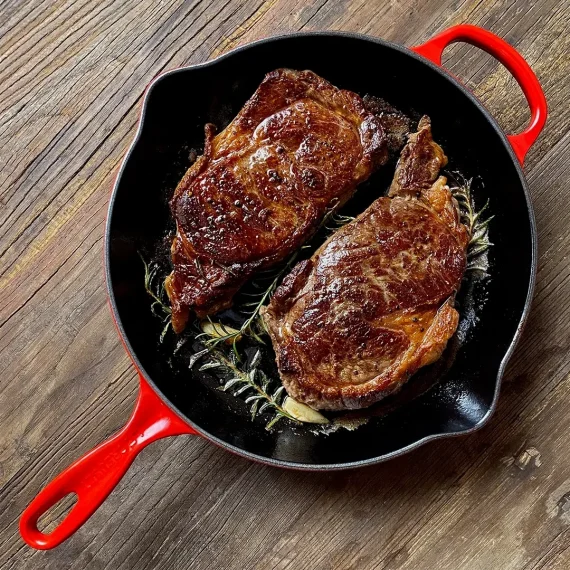
There is no better way to cook a steak at home than in a cast iron skillet. The pan’s ability to hold and distribute heat evenly creates a crust that rivals any steakhouse — and once you nail this technique, you’ll never go back to the grill for weeknight steaks.
This recipe works for ribeye, New York strip, or sirloin. The key is a very hot, dry pan, a generous amount of salt, and a few minutes of basting with garlic herb butter at the end. We tested this method in both the Lodge 12-inch cast iron skillet and the Le Creuset Signature Skillet — both produced outstanding results, though Lodge’s thicker walls gave a slightly more even sear.
Why Cast Iron Is the Right Tool
Cast iron skillets retain heat far better than stainless steel or nonstick pans. When a cold steak hits a screaming-hot cast iron surface, the pan barely drops in temperature — that’s what creates the deep mahogany crust. Nonstick pans, by contrast, lose heat quickly and steam the meat instead of searing it.
If you’re still deciding between pans, our Best Cast Iron Skillets guide breaks down the top options at every price point. The Lodge 12-inch (under $30) is our top pick for everyday cooking, while the Le Creuset is worth the investment if you want an heirloom piece that lasts a lifetime — see our full Lodge vs Le Creuset comparison for the details.
The Reverse Sear Option
For thicker steaks (1.5 inches or more), consider the reverse sear: start the steak in a 250°F oven until it reaches 10°F below your target temperature, then finish it in a ripping-hot cast iron pan for 60–90 seconds per side. This gives you edge-to-edge doneness with a perfect crust. The cast iron’s heat retention is essential for this final sear to work properly.