
LESSON 02 OF 12 · Cooking Techniques
Understand pan heat
Learn the sights and sounds that tell you when to turn the heat up—or down.
YOUR KITCHEN WIN
Use gentle, moderate, and high heat deliberately instead of guessing.
Gather: A frying pan, a little oil, a sliced onion, and a heatproof spatula.
*High heat suits some searing tasks and suitable pans—not this onion exercise or nonstick cookware. Visual cues guide heat control; they do not establish meat doneness.
Let’s do it, step by step
Illustrative AI-generated step photos. Follow the written instructions for measurements and technique.
Match the pan to the job
Choose a burner close to the size of the pan base. Keep handles turned inward. Follow your pan’s instructions; nonstick pans should not be preheated empty or used over very high heat.
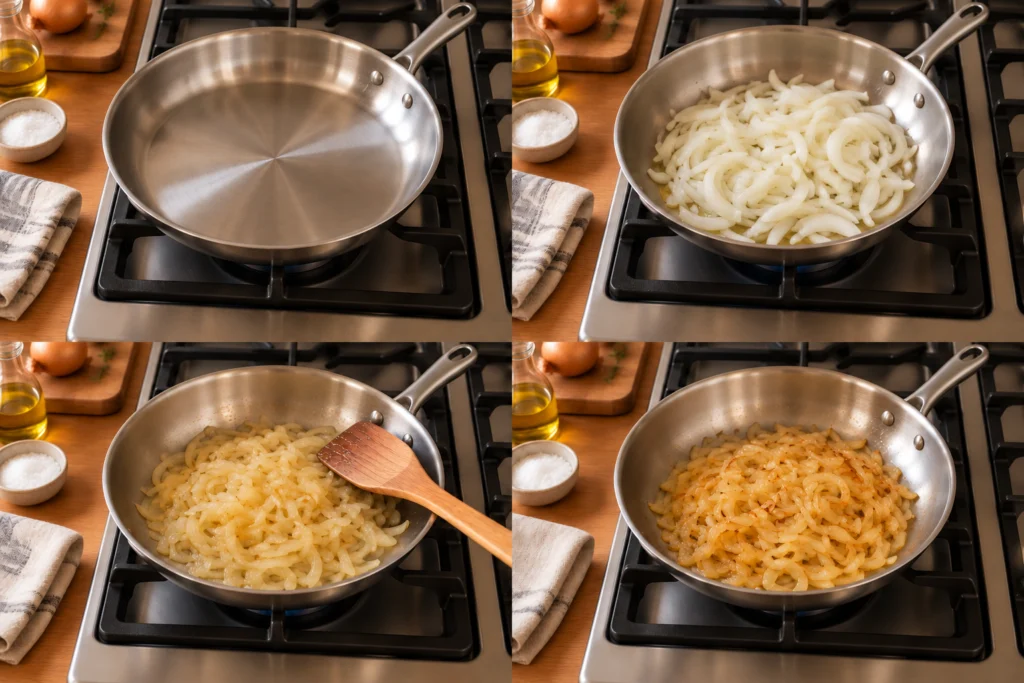
Choose a pan and a burner that fit the task. Begin at moderate heat
For this onion practice, put a little oil and the sliced onion in the pan over medium heat. The dial is only a starting point: burner strength and pan material vary.
Start the onions with a little oil over moderate heat. Listen and look
A gentle, steady sizzle and gradual softening are useful cues. Stir occasionally. If the edges darken before the centers soften, turn the heat down. If nothing happens after a few minutes, raise it slightly.
Watch for gradual softening and gentle browning. Adjust before it burns
If oil smokes, turn off the heat and carefully move the pan to a cool burner if safe. Let it cool; never add water to hot oil. Heavy pans retain heat, so reduce the setting before food gets too dark.
Adjust the heat before the onions get too dark.
SMALL FIXES, BETTER RESULTS
If it doesn’t go to plan
Brown outside, raw inside?
Lower the heat so the center has time to cook.
Food steams instead of browning?
Dry the surface and cook in smaller batches. Crowding traps moisture.
One skill learned. One step forward.
Try the exercise, then mark this lesson complete when you feel ready.