Module 5 · Lesson 13 of 18
Make a glossy pan sauce
Turn browned mushroom fond into a balanced sauce, and recognize when a pan needs cleaning instead.
Estimated time; full recipes may take longer.
Why this skill is important
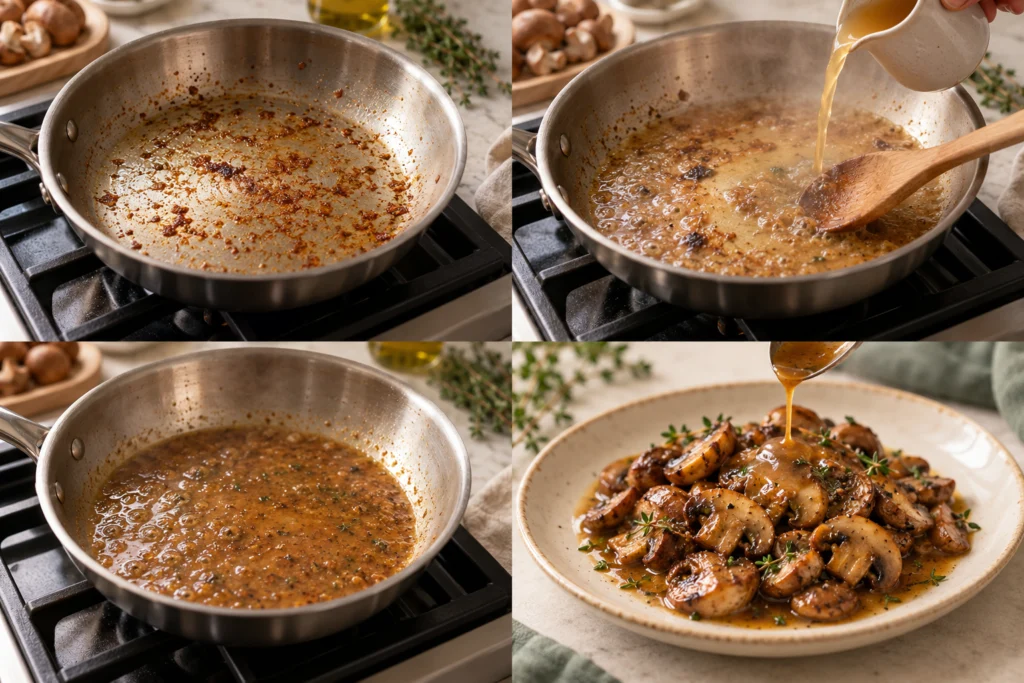
A pan sauce turns the flavorful brown residue left by cooking into something you can spoon over dinner. Start with mushrooms rather than raw meat so you can concentrate on heat, reduction and finishing. This is a small practice batch, not a reason to buy specialist equipment.
Get ready to cook
Gather what you need, check the safety essentials, then follow the method below.
- Understand pan heat
- Brown food without burning it
- Taste and adjust seasoning
Gather your tools
- Stainless-steel skillet used to brown mushrooms
- Wooden spoon or heat-safe spatula
- Measuring jug and teaspoon
- Small bowl and clean tasting spoon
Prepare your ingredients
- Browned mushrooms, removed from their cooking pan
- 120 ml (½ cup) low-sodium vegetable stock
- 1 teaspoon Dijon mustard
- 1 tablespoon cold butter, cut into small pieces
- Lemon, for a few drops of juice
- Water or unsalted stock, if needed
Follow the method
Lesson 13 — Make a glossy pan sauce
Read the setup and safety notes first. Follow the actions in order, then use each “Look for” cue to decide what to do next.
1Measure the finishers and clear the stove
- Move the cooked mushrooms to a clean bowl. Measure the stock, mustard and butter before you turn back to the pan; you should not need to search while it is hot.
- Check labels for milk, mustard and other relevant allergens. Turn the handle away from the edge and clear a landing place for the finished sauce.
2Keep brown fond; stop for smoke or burnt residue
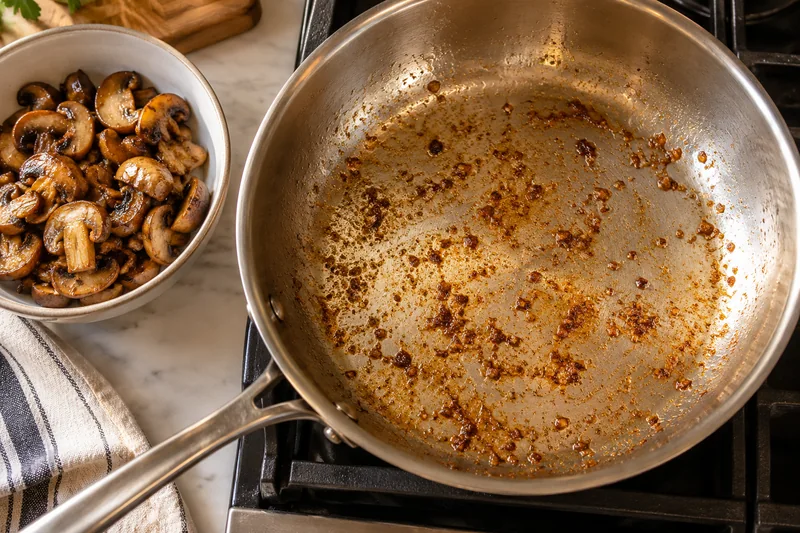
- Look at the exposed pan. Keep brown fond.
- If the pan is smoking, turn off the burner and let it cool safely before proceeding. Remove excess loose oil only when the pan has cooled enough to handle safely; never pour smoking oil.
- If the residue is black or smells burnt, let the pan cool, wash it and begin with clean stock in the clean pan.
3Pour in stock and loosen the browned bits
- Set the burner to low or medium. Carefully pour the measured stock into the warm pan, keeping your face and hands back from the rising steam.
- As the liquid bubbles, gently scrape the browned bits with a wooden spoon. Stop scraping once they have lifted into the liquid.
- Stock is enough: no wine, spirits or flames are needed.
4Simmer to half, then taste
- Let the stock simmer gently, not boil violently. Watch its depth until roughly half remains; pan width and burner strength change how long this takes.
- Taste a cooled spoonful, then stir in the mustard. If the sauce is already too salty, stop reducing and add a little unsalted stock or water.
5Stir in butter off the heat
- Remove the pan from the burner. Add the butter a little at a time, swirling or stirring until each addition is incorporated.
- Add a few drops of lemon, taste with a clean spoon and add more only if the sauce needs brightness. If it is too thick, stir in water one teaspoon at a time.
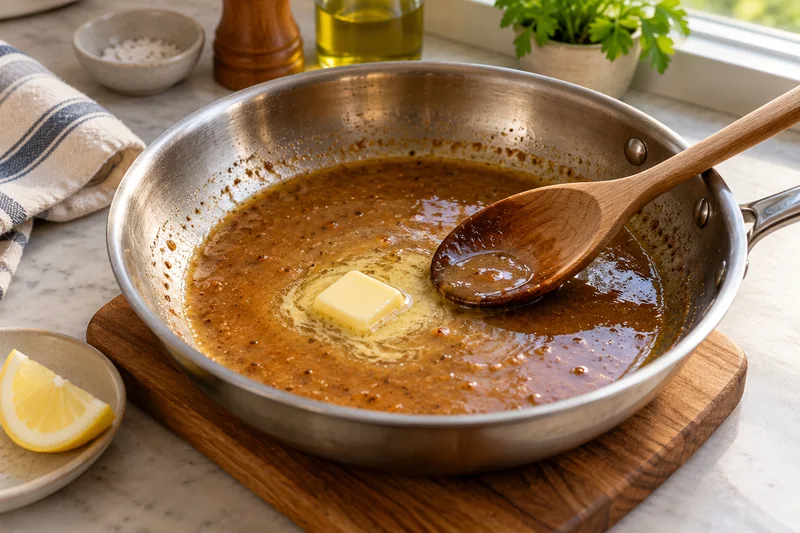
6Serve a comparison and note one change
- Spoon the sauce over the mushrooms and serve promptly. Compare a mushroom with sauce to one without.
- Note whether the change was mostly saltiness, richness or acidity. Write down one adjustment for your next attempt; do not keep reheating the sauce just to pursue perfect gloss.
Let’s review what you learned
A pan sauce in three changes
Stock lifts brown fond.
A gentle simmer reduces the liquid.
Off-heat butter and a little acid balance it.
A conceptual sequence; the pan’s appearance and taste matter more than a fixed timer.
Why the method works
Fond is flavor, not ash
Golden to deep brown stuck-on bits can flavor a sauce. Blackened, acrid residue cannot be repaired by adding more liquid. Inspect the pan before committing your ingredients.
Reduction changes both texture and seasoning
Evaporation leaves less water behind. The sauce becomes stronger and salt becomes more noticeable, so start with low-sodium stock and postpone extra salt.
Finish gently
Small pieces of cold butter dispersed off the heat give the liquid a glossy finish. A rolling boil after this step can separate the sauce. Gloss is useful feedback, not a requirement for safety.
When something needs adjusting
The sauce tastes bitter
Discard burnt fond and restart with a clean pan. More butter does not remove burned flavor.
The finished sauce looks oily
Take it off the heat and whisk in a teaspoon of cool water. This advice is for a finished liquid sauce, not a pan of hot oil.
The sauce is too thin
Before adding butter, simmer a little longer. After finishing, accept a lighter sauce rather than repeatedly boiling it.
Put it into practice
A two-spoon comparison
Make the mushroom sauce above. Taste one mushroom plain and another with a teaspoon of sauce. Describe the difference in ordinary words. Change only one thing—perhaps a few drops of lemon—and compare again. Keep the amount small so you can notice cause and effect.
Useful signs of progress
- Fond lifted without burning
- Sauce tasted before extra salt
- One specific adjustment recorded
Check your understanding
Choose an answer for each situation, then read the explanation. You can revise and try again.
Choose your answers, then check your understanding.
Your practice, your pace
After you have read the lesson and tried the practice, use these reflections to record your own progress.
Practice is self-reported, not an assessed qualification.
Use this skill in a recipe
Cast Iron Skillet Steak with Garlic Herb Butter
Optional later application: make a pan sauce in place of, not in addition to, the finishing butter; follow the recipe’s meat-safety instructions. If oil smokes, turn off the burner and let the pan cool safely; do not wait for heavy smoke or add water.
Use the full recipe and check its equipment, quantities and safety notes. Any meal-planner addition happens on the recipe page after your review.
Sources and lesson notes
Written guidance is informed by these sources. Reading and practice times are estimates; no claim is made that this lesson was practically tested.
- All-Clad: Pan deglazing — Liquid loosens fond; deglazing forms a sauce base.
- FDA: Food Allergies — Read ingredient labels and prevent allergen cross-contact; substitutions do not automatically make food safe.