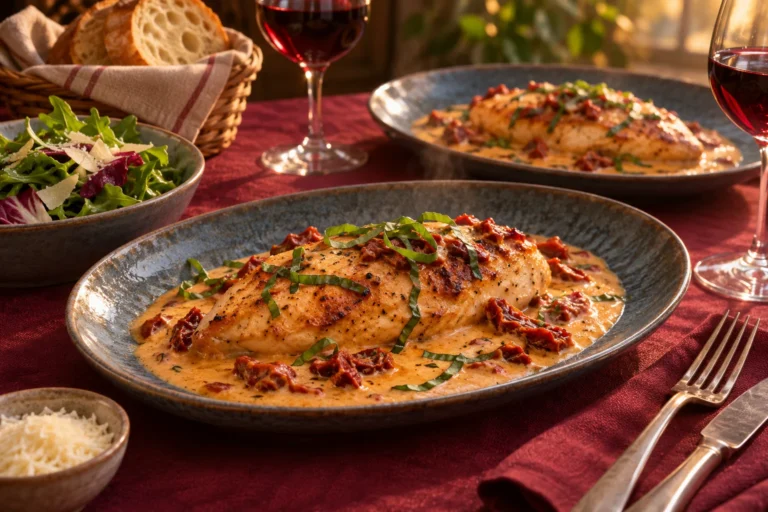
Marry-Me Chicken
Main Dishes
Chicken cutlets simmer in a creamy garlic sauce with sun-dried tomatoes, Parmesan and fresh basil. This version thickens by gentle reduction and cheese rather than a flour coating. This recipe…
View recipe →
Labels describe the listed ingredients; check packaged ingredients, optional extras and cross-contact for your needs. Gluten-free is not an allergen-safety guarantee. Vegetarian cheese should use vegetarian rennet.
HCP browsing criteria, per original-size serving: high-protein ≥25 g protein and ≥20% of calories from protein; low-carb ≤15 g total carbs; keto-friendly ≤10 g total carbs with ingredient review; low-fat ≤3 g fat and ≤30% of calories from fat. These use estimated nutrition for the version described on the recipe, excluding specified extras. Mediterranean-inspired describes ingredients, not a prescribed diet. Unreviewed recipes are left unlabelled; no badge does not mean a recipe is unsuitable.
Roasted butternut squash, carrot and thyme blend into a dairy-free soup with practical doneness checks, hot-blending guidance and storage instructions.
Allow approximately 25 minutes preparation and 55 minutes cooking, about 80 minutes total. Squash roasts for 35–45 minutes while the aromatics cook, followed by about 10 minutes simmering and blending. These tasks overlap; timings are estimates.

This page may contain affiliate links. We may earn a commission from qualifying purchases at no additional cost to you. As an Amazon Associate, we earn from qualifying purchases. Read our affiliate disclosure.
Original recipe: 6 servings.
Only ingredient amounts adjust. Instructions, cooking times, package sizes and other preparation notes stay as originally written. Simple weight and volume equivalents adjust with servings. Nutrition is per original-size serving.Check off ingredients as you go.
Heat the oven to 425°F (220°C). Wash the whole squash under running water and dry it. Trim a small stable base, separate the narrow neck from the bulb and peel with a sturdy peeler. Halve the bulb on its flat cut face, scoop out seeds and cut the flesh into roughly 1-inch cubes. Weigh 1200 g prepared flesh.
Tip: Use a stable board and sharp knife. If it is hard to control, use pre-cut squash rather than forcing the blade.
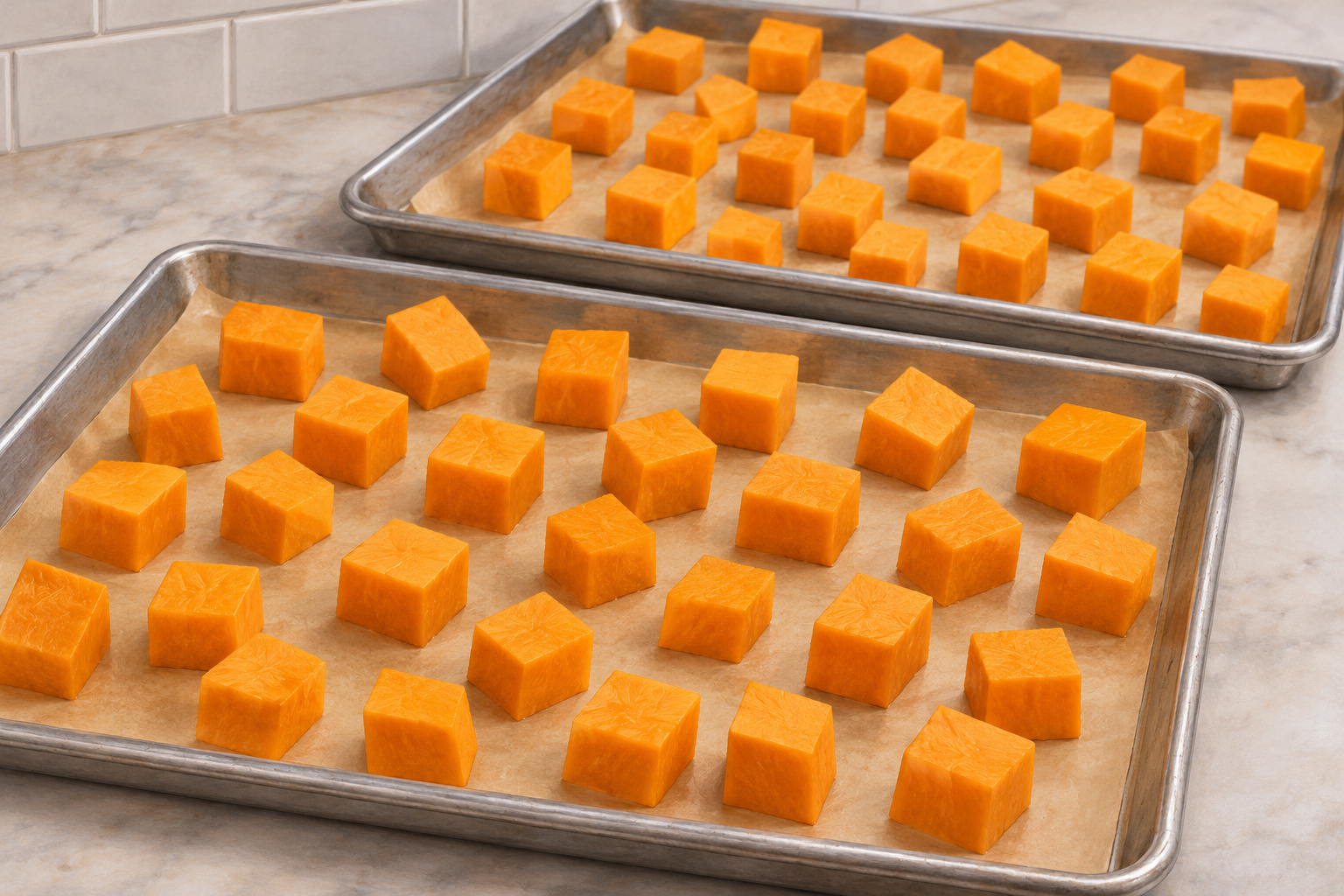
Toss the squash with 1 1/2 tablespoons of the oil, 1/2 teaspoon of the salt and the pepper. Spread in a single layer over two rimmed metal baking sheets, leaving space between pieces.
Tip: Crowded or piled pieces steam instead of browning.
Roast for 35–45 minutes, turning the pieces and swapping tray positions halfway through, until some edges are browned and a fork slides easily through the largest cubes.
Tip: The squash must be soft through the center, not merely dark at the edges. Ovens and cube sizes vary.
While the squash roasts, warm the remaining 1/2 tablespoon oil in a large pot over medium-low heat. Add onion and carrots and cook for 8–10 minutes, stirring. Add garlic and thyme and stir for 30 seconds. Add the water and remaining 1/2 teaspoon salt, bring to a boil, then simmer gently until the carrots are tender.
Tip: Lower the heat if the onion catches. The carrots need to be soft enough to blend smoothly.
Add the roasted squash to the pot, scraping in any browned squash pieces that release easily from the sheets. Simmer for about 10 minutes so the flavors combine. Turn off the heat and move the pot off the burner.
Tip: Do not scrape in burned black residue. Add a little water if necessary to keep the vegetables submerged enough to blend.
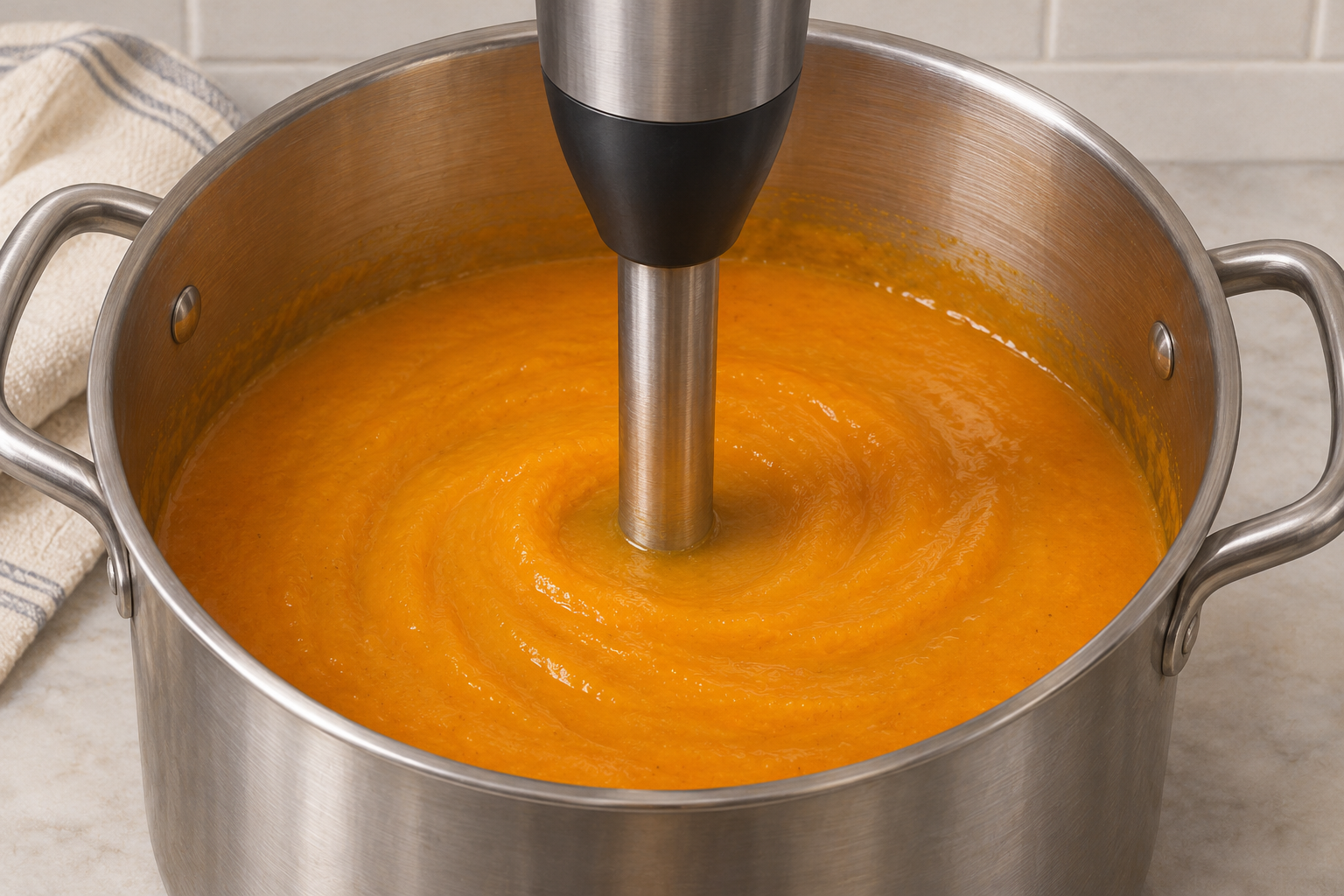
Following the immersion-blender manufacturer’s instructions, place the blade guard fully below the soup surface before switching on at low speed. Blend until smooth, keeping the guard submerged to limit splashes. Switch off before lifting it. If your blender is not approved for hot food, let the soup cool safely in shallow containers and blend it cool instead.
Tip: Hot soup and steam can burn. Never blend hot soup in a sealed personal-blender cup.
Return the smooth soup to gentle heat, stirring. Add small splashes of water until it pours comfortably from a ladle. Taste and adjust seasoning if needed, then divide into six equal portions.
Tip: Extra water changes the cup yield; additional salt or toppings change nutrition. The base soup needs no dairy swirl.
Want a little more guidance? Explore the extra notes below for context and advice to help you get more from this recipe.
Back to ingredients & instructions ↑NUTRITION & YOUR NEXT MEAL
Choose a recipe version below. Estimates are per recipe serving; optional ingredients, brands and preparation can change the result.
Estimated nutrition per serving · One of 6 equal portions; no accompaniments
One of 6 equal portions, without toppings, cream, stock or bread. Raw trimmed edible vegetable weights are used, not whole purchase weights. All 27 g olive oil and 6 g salt are counted; tray residue is not deducted. Optional extra seasoning is excluded. Water evaporation changes finished weight, not modeled batch totals. Water contributes zero for the reported nutrients; mineral content varies. No measured finished weight, exact cup yield, laboratory analysis or kitchen test is claimed.
Calculated using freshly checked primary USDA Standard Reference 28 vegetable, oil and spice data. Natural ingredient and brand variation applies. Not laboratory analysis or kitchen-tested nutrition. About the reference data.
Meal-planner integration is being checked. You can still use this recipe and its nutrition estimate. Planner and shopping-list buttons will return after its ingredient references are verified.
This recipe has not been kitchen-tested. Cooking times and yields are estimates; use the stated doneness checks and applicable food-safe temperatures.
Roasting squash in a roomy single layer concentrates its flavor before it is blended with onion, carrot and thyme. This version uses water rather than stock, so the vegetable flavor and salt level stay under your control.
Weigh 1200 g peeled, seeded squash flesh, not the whole squash; buy approximately 3 1/2 pounds whole to allow for trimming. Use two rimmed baking sheets, a large pot and an immersion blender rated for hot foods. A pre-cut squash package is a practical alternative if the whole squash is difficult to cut safely. There is no cream, butter or stock in the base recipe.
Gram quantities are the reference values; household measures are approximate. Scaling ingredients does not scale pan dimensions or cooking time. Divided amounts in the instructions describe the base batch; adjust every portion consistently. Use additional original-size pans or batches for larger quantities.
Serves 6. Allow approximately 25 minutes preparation and 55 minutes cooking, about 80 minutes total. Squash roasts for 35–45 minutes while the aromatics cook, followed by about 10 minutes simmering and blending. These tasks overlap; timings are estimates.
Check that both squash and carrots are fully tender before blending. Blend longer within the appliance operating limits, adding water a little at a time.
Brown the squash without scorching it and use the measured salt; watery, pale roasted squash contributes less flavor. Taste before adding extra salt.
Add water in small splashes after blending. The exact amount depends on evaporation and the moisture of the squash.
Per one of 6 equal portions: about 157 calories, 2.8 g protein, 29.8 g carbohydrate, 4.8 g fat, 5.4 g fiber and 415 mg sodium. Calculated from primary USDA ingredient references, not laboratory analysis. All listed ingredients included. Brands, substitutions and extra seasoning change actual values. Water loss changes finished weight but not this modeled nutrient total. Squash grams are peeled, seeded edible flesh before roasting, not purchase weight. Water contributes zero for the reported nutrients in this model; minerals vary with the local supply. No stock, cream, toppings or bread included. All measured olive oil is counted; residue on the roasting sheets is not deducted. Gluten-free and vegan labels apply only to the specified base formulation and verified packaged ingredients, not every substitution.
Labels: Vegan, Vegetarian, Dairy-free. Gluten-free only when packaged ingredients are verified and cross-contact is avoided. Base ingredients contain no animal products or intentionally added gluten. Use verified gluten-free spices and avoid cross-contact if medically necessary. No allergen-free guarantee is made; toppings and substitutions can change labels.
Calculated using USDA Standard Reference 28 reports for vegetables, olive oil and spices and salt.

Main Dishes
Chicken cutlets simmer in a creamy garlic sauce with sun-dried tomatoes, Parmesan and fresh basil. This version thickens by gentle reduction and cheese rather than a flour coating. This recipe…

Main Dishes
Thin egg-pasta sheets enclose a well-drained spinach and ricotta filling, then finish in a light butter sauce. Keeping the filling dry and pressing out trapped air are more useful than…

Main Dishes
Turkey, spaghetti and mushrooms bake in a creamy milk sauce under a crisp Parmesan breadcrumb topping. Slightly undercooking the pasta before baking helps it retain some bite. This recipe has…
Get weekly recipes and practical cooking tips from Home Cook Picks, straight to your inbox.
Optional. Recipes only unless you choose offers. Unsubscribe anytime.
Weekly recipes and practical cooking tips, straight to your inbox.
Optional. Recipes only unless you choose offers. Unsubscribe anytime.
Sign up for weekly recipes and practical tips for more confident home cooking.
Optional. Recipes only unless you choose offers. Unsubscribe anytime.
Get weekly recipes and practical cooking tips to help put your new skills to work.
Optional. Recipes only unless you choose offers. Unsubscribe anytime.
Weekly recipes and practical cooking tips, delivered fresh to your inbox.
Thanks for signing up. Please open the confirmation email from Home Cook Picks and click the link to confirm your subscription. If you don't see it, check your spam or promotions folder.