A stand mixer is one of the few kitchen appliances that genuinely transforms the cooking experience. Unlike most gadgets that promise to save time but end up collecting dust, a quality stand mixer earns its counter space every week — whether you’re making bread dough, whipping cream, beating cake batter, or kneading pasta dough. The hands-free mixing frees you to prep other ingredients, and the consistent, thorough mixing produces better results than hand mixing for most tasks.
The challenge is choosing the right one. The stand mixer market ranges from budget options under $100 to premium machines over $800, and the performance differences are real. Understanding what separates a great stand mixer from a mediocre one requires looking at motor power, bowl capacity, mixing action, and the long-term value of the attachment ecosystem.
We tested six of the most popular stand mixers across a range of baking tasks — from delicate meringues to stiff whole-grain bread doughs — and evaluated them on mixing performance, ease of use, durability, and overall value.
How Stand Mixers Work
All stand mixers use a planetary mixing action — the attachment rotates on its own axis while simultaneously orbiting around the bowl, ensuring thorough mixing coverage. The key variables are motor power (which determines how well the mixer handles heavy loads), bowl capacity (which determines batch size), and the design of the mixing head (tilt-head vs bowl-lift).
Motor power is measured in watts, but manufacturers often advertise “peak” wattage rather than continuous wattage. A mixer rated at 325W continuous is more capable than one rated at 500W peak. Look for continuous wattage ratings when comparing models.
Tilt-Head vs Bowl-Lift: Which Design Is Right for You?
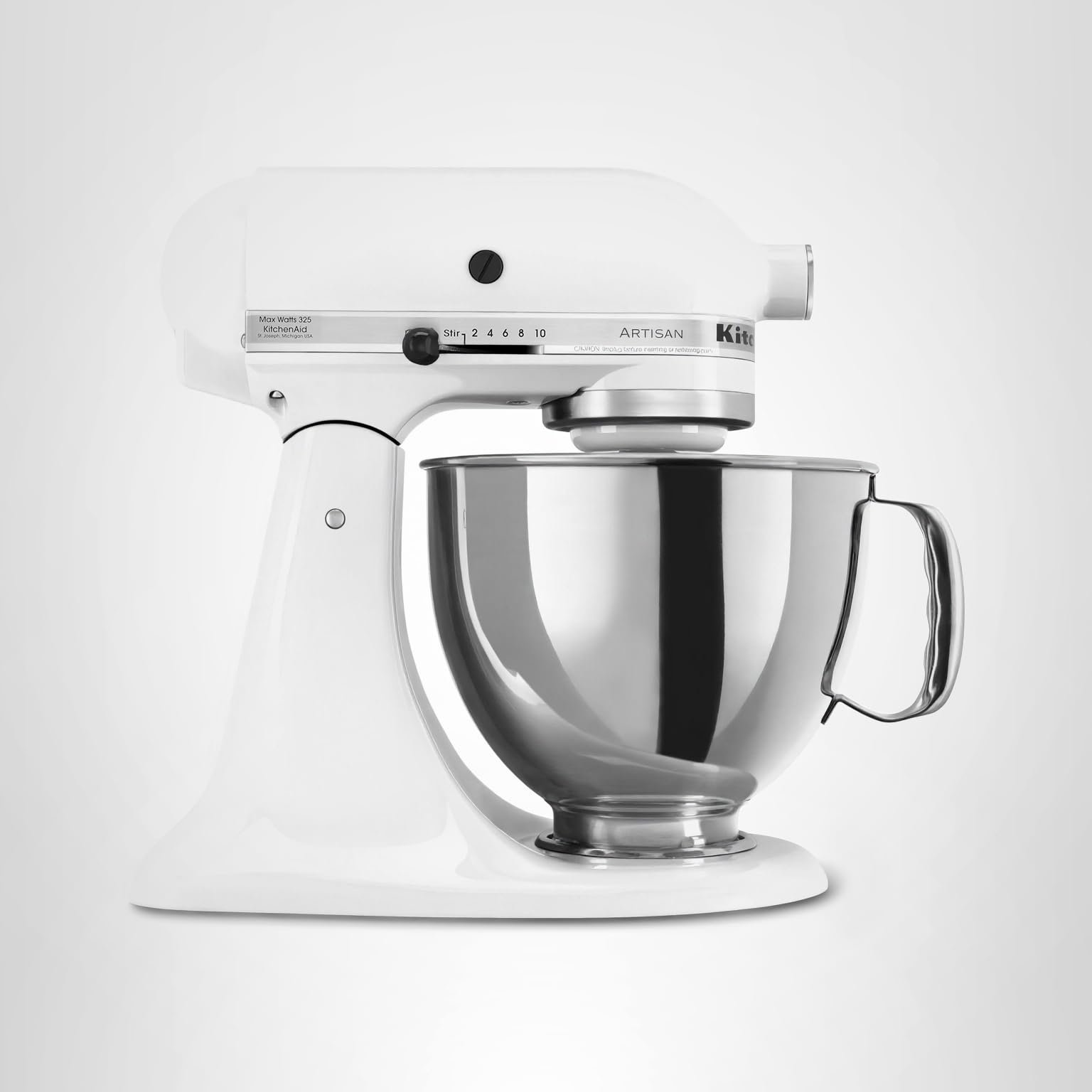
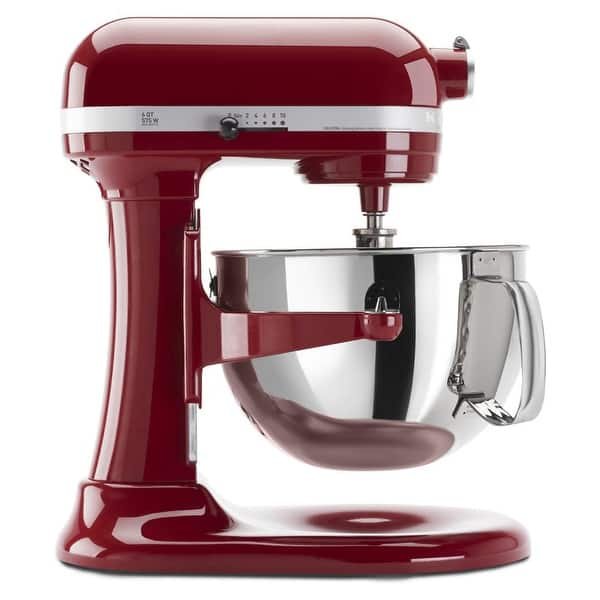
The two main stand mixer designs each have distinct advantages. Tilt-head mixers — like the KitchenAid Artisan — have a head that tilts back to provide access to the bowl. This design is more convenient for adding ingredients mid-mix and swapping attachments. Bowl-lift mixers — like the KitchenAid Professional 600 — have a fixed head and a lever that raises and lowers the bowl. This design is more stable for heavy doughs and better suited for large batches.
For most home bakers who primarily make cakes, cookies, and occasional bread, a tilt-head design is more practical. For dedicated bread bakers who regularly make large batches of dense doughs, a bowl-lift design provides better stability and typically pairs with a more powerful motor.
Our Top Picks
#1 KitchenAid Artisan Series 5-Quart — Best Overall
The KitchenAid Artisan has been the benchmark home stand mixer for decades, and it remains the top recommendation for most home bakers. The 325-watt motor handles the full range of home baking tasks, the 5-quart stainless steel bowl accommodates most standard recipes, and the tilt-head design makes it easy to use. The real differentiator is the attachment ecosystem — over 80 attachments are available, turning the Artisan into a pasta maker, meat grinder, ice cream maker, spiralizer, and more. Available in over 50 colors, it’s also one of the most visually appealing appliances you can put on a counter.
#2 Cuisinart Precision Master 5.5-Quart (SM-50) — Best Value
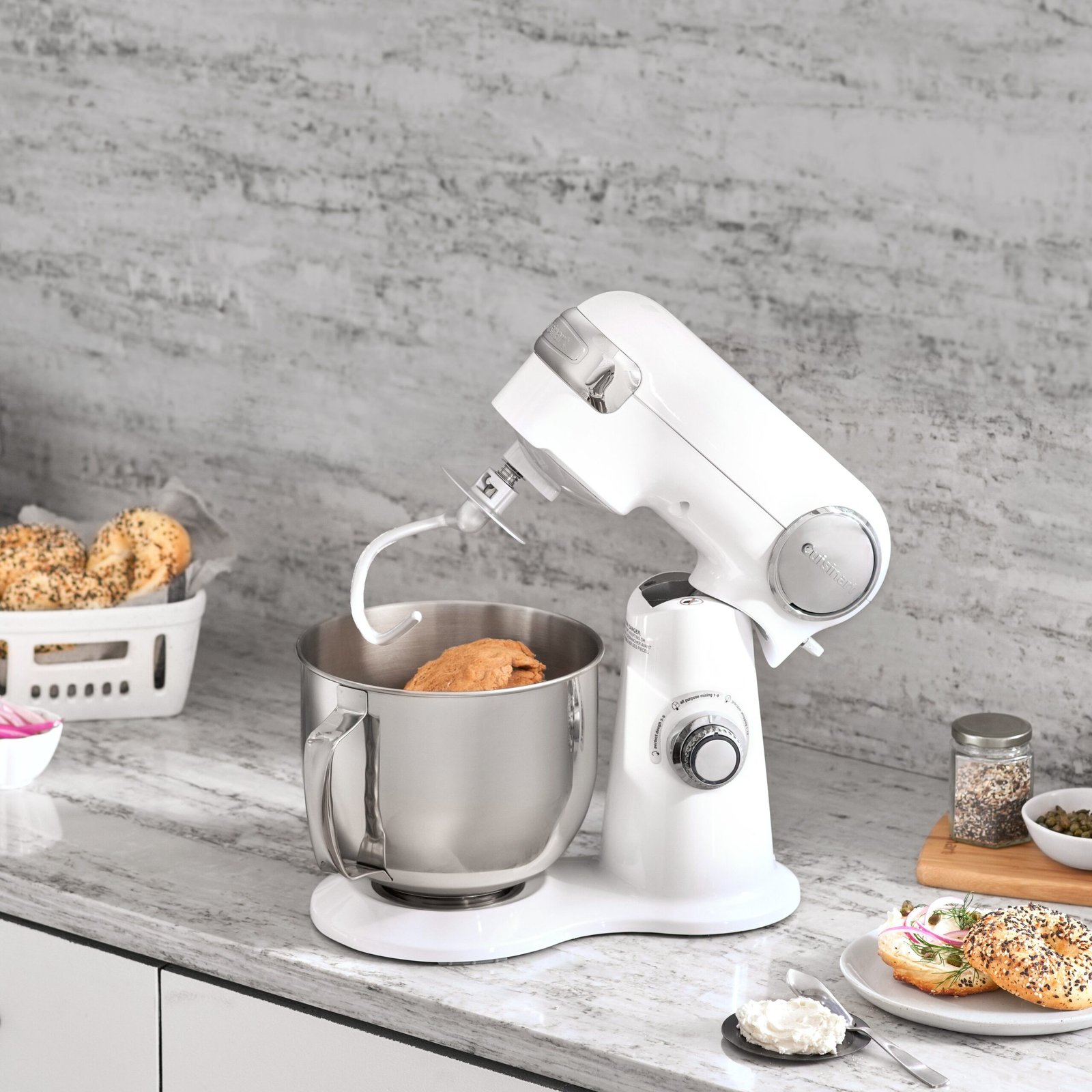
The Cuisinart SM-50 is the best value stand mixer available. Its 500-watt motor is more powerful than the KitchenAid Artisan’s 325W, the 5.5-quart bowl provides extra capacity, and the price is roughly half that of the Artisan. For home bakers who want solid performance without the premium price, the SM-50 is an excellent choice. The attachment ecosystem is smaller than KitchenAid’s, but the core mixing performance is genuinely impressive for the price.
#3 Bosch Universal Plus — Best for Bread
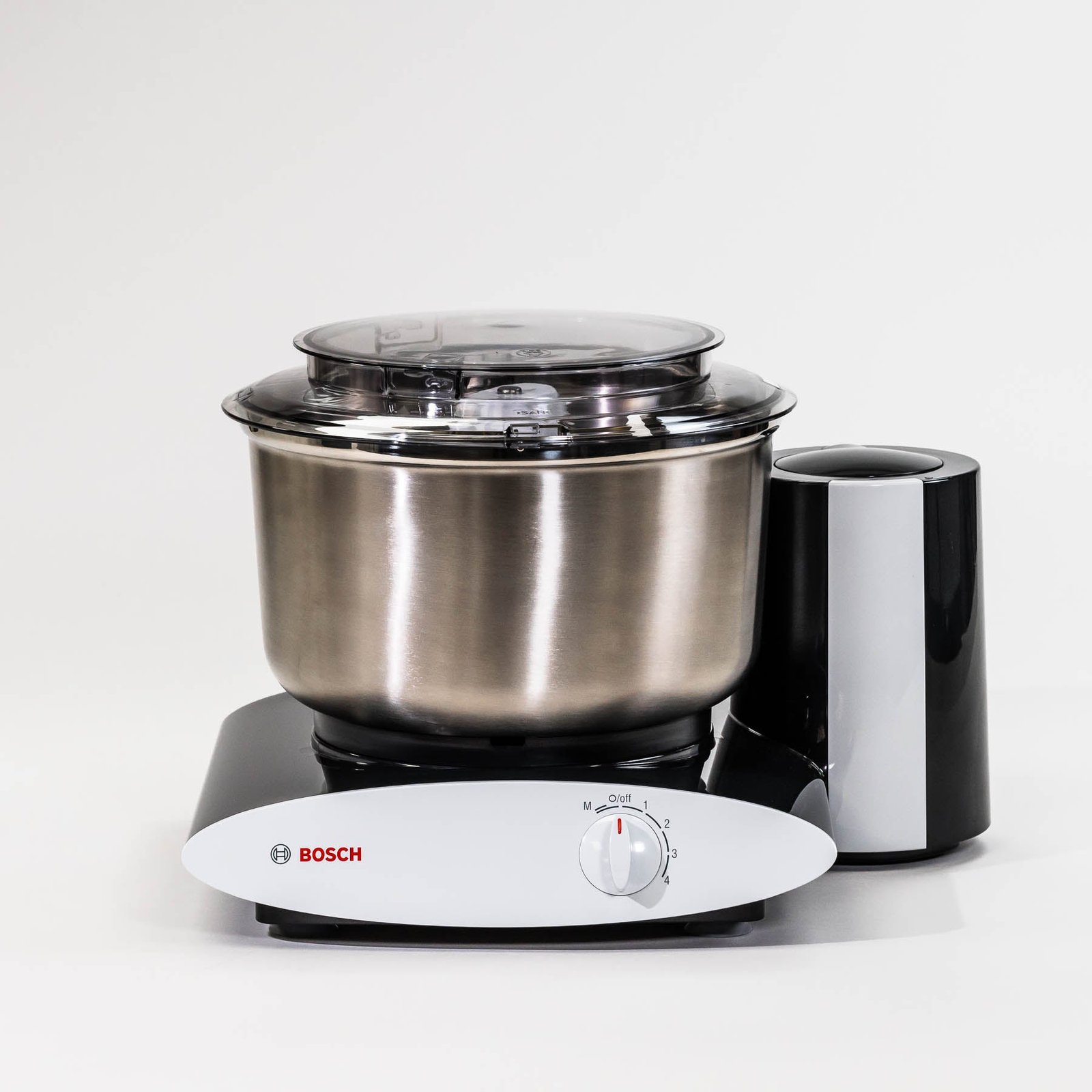
The Bosch Universal Plus is the preferred stand mixer among serious bread bakers. Its unique bowl design — where the dough hook rotates around a central post in a large 6.5-quart bowl — is exceptionally effective at developing gluten in stiff bread doughs. The 800-watt motor handles double batches of dense whole-grain doughs that would strain a KitchenAid. For bakers who primarily make bread, the Bosch outperforms everything else in its price range.
#4 Ankarsrum Original — Best Premium
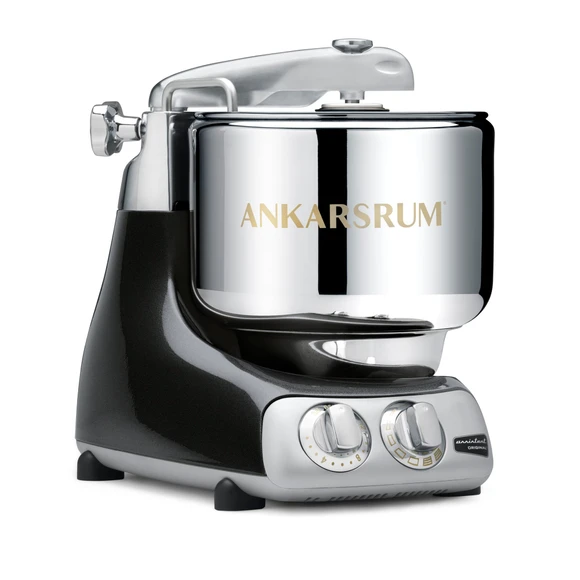
The Ankarsrum Original is a Swedish-made stand mixer with a unique rotating bowl design that mimics the action of hand kneading. It’s the preferred mixer of many professional bakers and serious home bread enthusiasts. The 7-liter bowl, 600-watt motor, and exceptional build quality justify the premium price for dedicated bakers. The learning curve is steeper than conventional stand mixers, but the results — particularly for bread doughs — are exceptional.
#5 KitchenAid Professional 600 Series 6-Quart — Best for Large Batches
The KitchenAid Professional 600 upgrades the Artisan with a bowl-lift design, a larger 6-quart bowl, and a more powerful 575-watt motor. It’s the right choice for bakers who regularly make large batches and find the Artisan’s capacity limiting. Full compatibility with all KitchenAid attachments means you don’t lose any of the ecosystem benefits when upgrading.
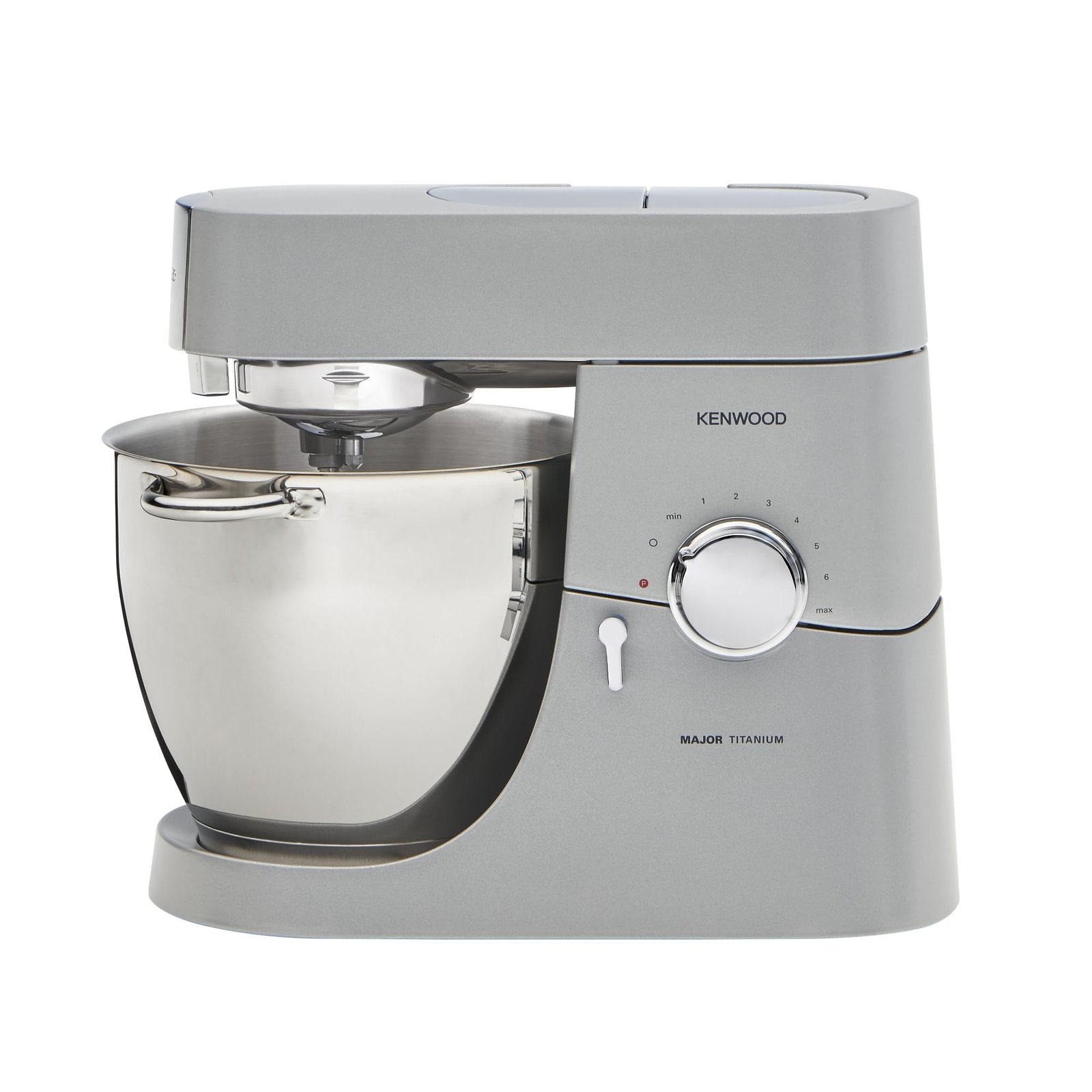
#6 Kenwood Chef Titanium — Best European Alternative
The Kenwood Chef Titanium is the European counterpart to the KitchenAid, with a 7-quart bowl, 800-watt motor, and comprehensive attachment system. It’s less common in North America but offers excellent performance and build quality at a competitive price. For cooks who want more power and capacity than the KitchenAid Artisan without the Bosch’s bread-focused design, the Kenwood is a strong alternative.
What to Look for When Buying
Motor Wattage Matters for Bread
For occasional cookie and cake baking, 250-325W is sufficient. For regular bread baking with stiff doughs, look for 500W or more. The KitchenAid Artisan’s 325W motor can struggle with large batches of dense whole-grain bread dough.
Bowl Capacity and Batch Size
A 5-quart bowl makes 6-8 dozen cookies or 2 loaves of bread per batch. A 6-7 quart bowl doubles that capacity. Match bowl size to your typical batch size — a bowl that’s too large for small batches can result in poor mixing.
Tilt-Head vs Bowl-Lift Design
Tilt-head mixers are more convenient for adding ingredients and swapping attachments. Bowl-lift mixers are more stable for heavy doughs and better suited for large batches. Most home bakers prefer tilt-head; serious bread bakers often prefer bowl-lift.
Consider the Attachment Ecosystem
KitchenAid’s attachment system is the most extensive available, with over 80 attachments. If you want to expand your mixer’s capabilities over time, KitchenAid’s ecosystem is unmatched.
Color and Aesthetics
Stand mixers live on the counter and become part of your kitchen’s visual identity. KitchenAid offers the widest color selection with over 50 options. If aesthetics matter, factor in color availability when comparing brands.
Warranty and Longevity
Quality stand mixers last decades with proper care. Consider long-term support when evaluating premium options. Ankarsrum offers a 7-year warranty; KitchenAid offers 1 year but has strong parts availability.
Quick Comparison
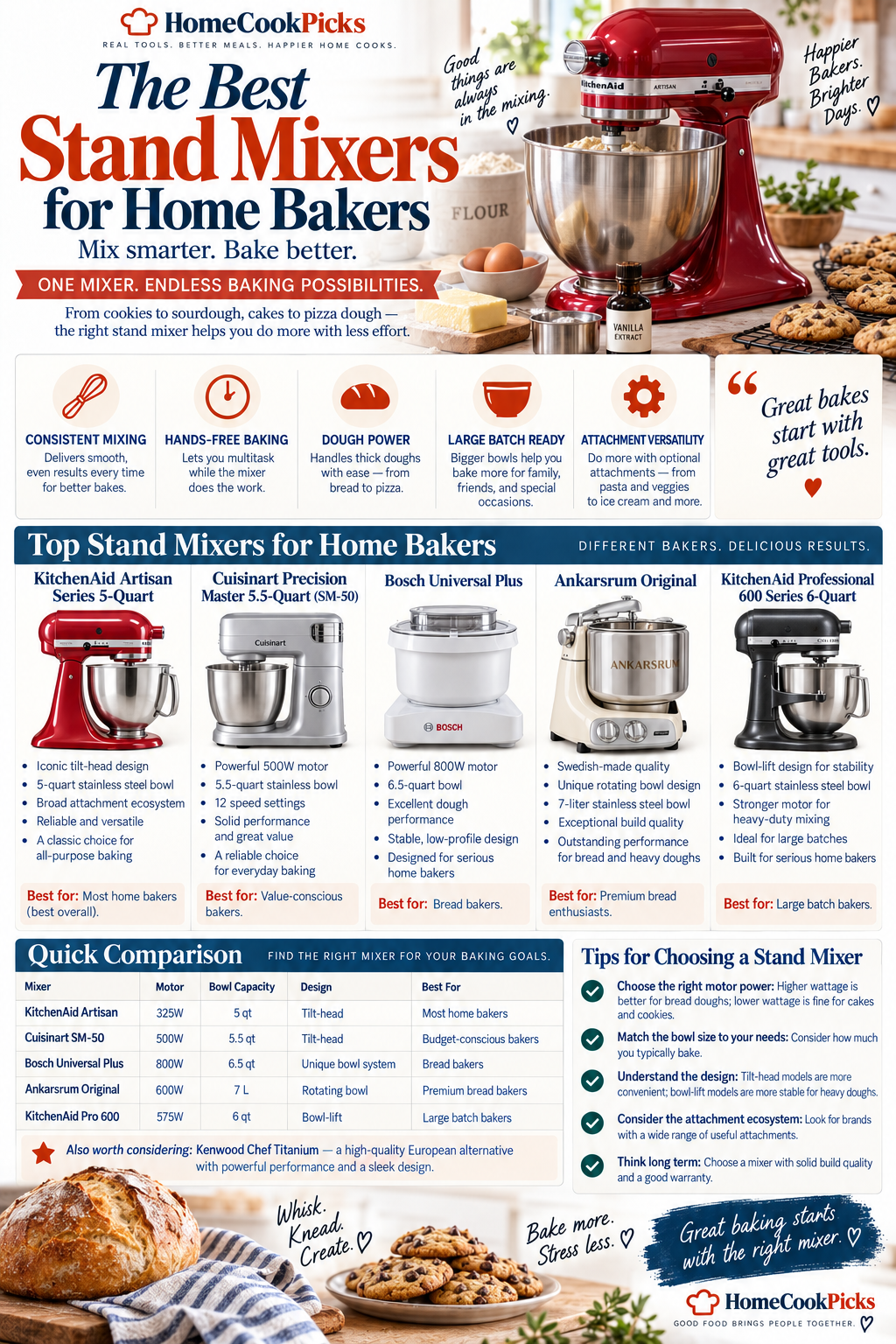
| Mixer | Price | Motor | Bowl | Design | Best For |
|---|---|---|---|---|---|
| KitchenAid Artisan | $449 | 325W | 5 qt | Tilt-head | Most home bakers |
| Cuisinart SM-50 | $199 | 500W | 5.5 qt | Tilt-head | Budget-conscious bakers |
| Bosch Universal Plus | $399 | 800W | 6.5 qt | Bowl-lift | Bread bakers |
| Ankarsrum Original | $799 | 600W | 7 L | Rotating bowl | Premium bread bakers |
| KitchenAid Pro 600 | $549 | 575W | 6 qt | Bowl-lift | Large batch bakers |
| Kenwood Chef Titanium | $499 | 800W | 7 qt | Tilt-head | European-style baking |
Our Verdict
The KitchenAid Artisan Series 5-Quart is our top recommendation for most home bakers. Its combination of performance, durability, and the unmatched attachment ecosystem makes it the best long-term investment in the stand mixer category. For budget-conscious bakers, the Cuisinart SM-50 delivers impressive performance at half the price. And for dedicated bread bakers who regularly work with stiff, heavy doughs, the Bosch Universal Plus is the superior choice — its 800-watt motor and unique bowl design produce bread results that the KitchenAid simply can’t match.