
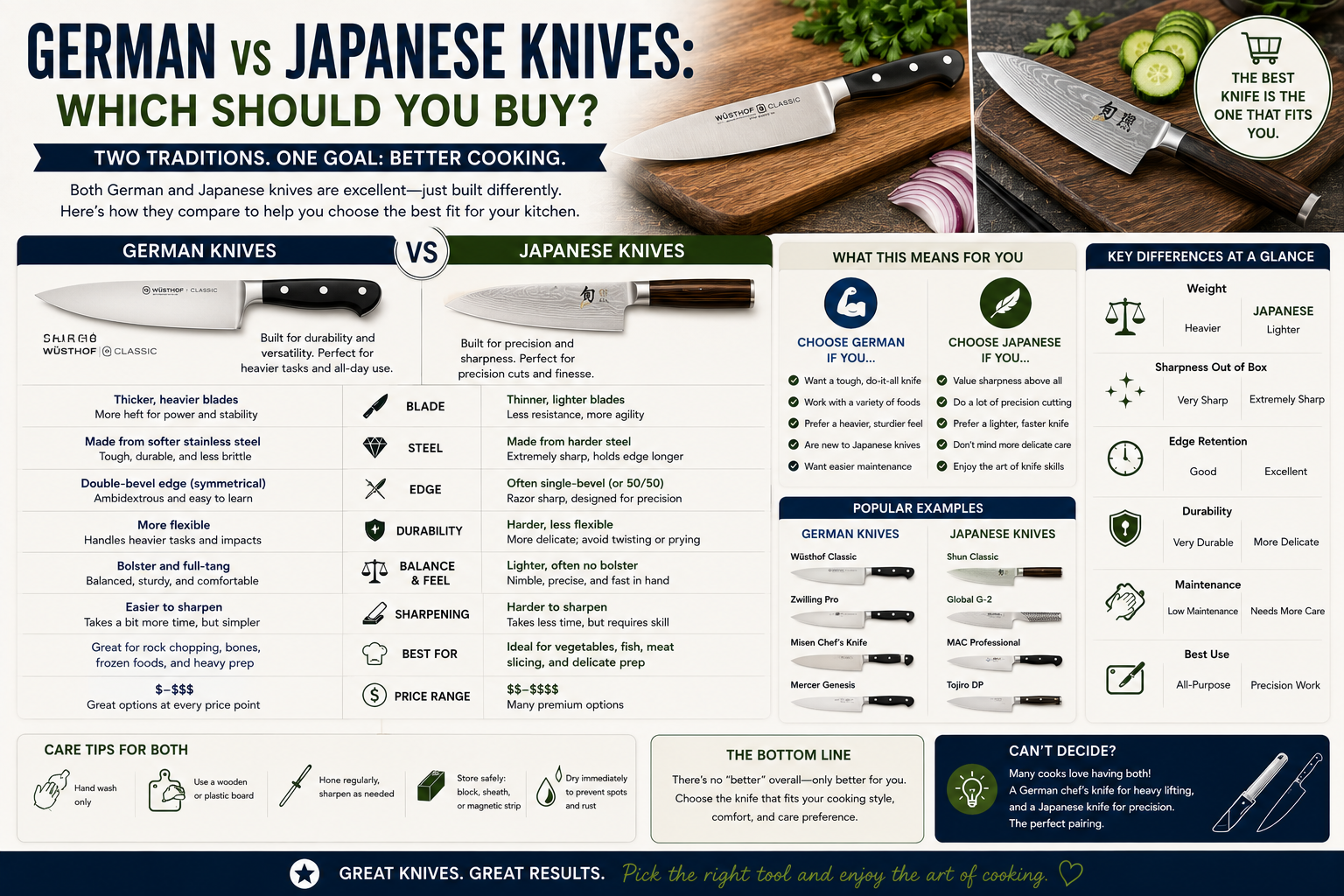
The debate between German and Japanese chef’s knives is one of the most enduring in the culinary world — and for good reason. Both traditions produce exceptional knives, but they reflect fundamentally different philosophies about what a knife should do and how it should feel in the hand.
German knives, exemplified by brands like Wusthof and Henckels, are built for durability and versatility. They use softer steel that is more forgiving of imperfect technique, heavier construction that provides momentum when cutting, and a curved blade profile that suits the rocking motion most Western cooks use. Japanese knives, exemplified by brands like MAC, Shun, and Global, prioritize sharpness above all else. They use harder steel ground to a narrower angle, which creates an edge that is noticeably sharper but also more brittle and demanding of proper technique and maintenance.
This guide explains the key differences between the two traditions and helps you decide which type is right for your cooking style, skill level, and maintenance preferences.
There is no objectively correct answer to the German vs. Japanese question — only the answer that is right for your cooking style. If you are a beginner, cook occasionally, or want a knife you can use and maintain without much thought, start with a German knife. If you cook frequently, enjoy the process of knife maintenance, and want the best possible cutting performance for precision work, a Japanese knife will reward you. Many experienced home cooks eventually own both, using a German knife for heavy-duty tasks and a Japanese knife for precision work — a combination that covers every scenario in the kitchen.


