
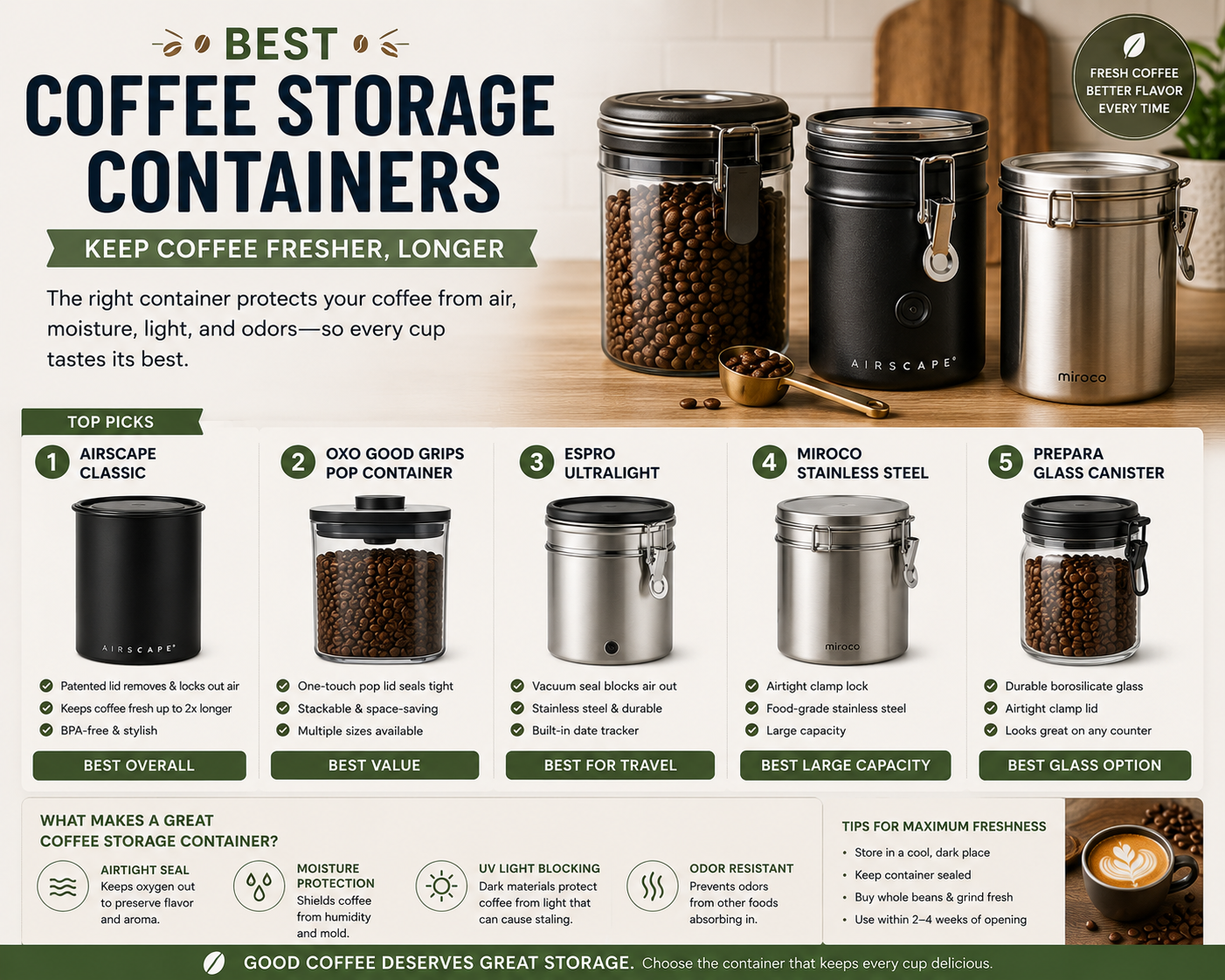
Storing coffee well is one of the simplest upgrades you can make to improve daily flavor. Freshly roasted beans begin losing aroma and taste the moment they are exposed to oxygen, light, heat and moisture. For home cooks and coffee lovers who grind at home or buy whole-bean coffee in small batches, the right storage container preserves volatile oils and aromatics so your morning cup tastes closer to the roaster’s intent.
This guide walks through the best coffee storage containers for a range of needs: airtight canisters for whole beans, vacuum-sealed vessels for long-term storage, and compact systems for small kitchens. I’ll evaluate materials (stainless steel vs. opaque plastic vs. tin), seal types (silicone gasket, one-way valves, mechanical lids), capacity, and practical features like scoops, stackability and cleaning ease. The goal is to match the container to how much coffee you buy, how quickly you use it, and where you store it.
You’ll find five well-known products from reputable brands, each with pros, cons, and a clear description of what they do best. After the product breakdown I’ll share five practical buying tips to help you choose based on use-case — whether you’re a single-cup brewer who buys weekly or a batch roaster who needs long-term storage. Finally, there’s a short FAQ addressing common concerns like degassing, refrigeration and cleaning. Read on to learn which container will help you keep beans bright, balanced and closer to roast-day flavor.
Choosing the right coffee storage container depends on how quickly you consume coffee and how much counter space you have. For most home brewers who buy one- to two-week supplies, a stainless-steel canister with a strong silicone seal and opaque body — like the Fellow Atmos or Coffee Gator — will protect beans from oxygen and light while being easy to use daily. If you want the maximum shelf life for monthly supply, a vacuum or piston-style system (Tightvac or Airscape) reduces air exposure further and makes long-term storage more practical.
My top practical recommendation for the average home cook is a mid-capacity stainless-steel canister with an airtight gasket and opaque finish: it balances preservation, ease of use and kitchen aesthetics. If you routinely roast at home or buy in bulk, pair that canister with an inexpensive vacuum system or consider a sealed canister with an internal valve to release CO2. Whatever you choose, prioritize an airtight seal, an opaque or stainless body, and a size that fits how many days you use between refills so your coffee stays fresh and flavorful.