Batch Cooked Lentils for the Week
Lentils are one of the most convenient, nutritious, and economical staples you can keep in your kitchen. They cook quickly, require no soaking, and pair well with a wide range of flavors — from Mediterranean vinaigrettes to Indian dals and hearty stews. Batch-cooking lentils at the start of the week frees you from daily meal prep and gives you a blank canvas for quick bowls, soups, salads, and side dishes.
What makes this batch method special is a simple flavor base and intentional texture control: sautéing aromatics first adds depth, using a measured water-to-lentil ratio keeps the lentils tender but not mushy, and finishing with acid brightens the whole pot. The result is shelf-stable (in the fridge) cooked lentils you’ll actually want to eat all week long.
Why batch-cook lentils?
Beyond the obvious time savings, batch-cooking enhances consistency. When you cook a large pot and cool it properly, you avoid the variability of one-off batches: undercooking, overcooking, or under-seasoning. Portioning into individual containers also helps with meal planning and portion control. Plus, lentils reheat beautifully and take on other flavors when finished with dressings, spices, or a splash of lemon.
Choosing the right equipment
For batch-cooked lentils, a medium-to-large heavy-bottomed saucepan or Dutch oven is ideal — it distributes heat evenly and prevents scorching. A fine-mesh strainer is handy for rinsing lentils, and quality food storage containers are crucial for portioning and preserving freshness. If you prefer glass, look for oven-safe, BPA-free sets; if you want lightweight options for lunches, collapsible containers save fridge space.
Recommended items:
- Stainless steel saucepan — a good 3- to 4-quart pan will serve you well for batch cooking.
- Glass food storage containers — excellent for storing hot lentils and reheating in the oven or microwave.
If you want to compare container types before you buy, check a focused guide on options like glass, stainless steel, and collapsible plastics. We recommend our buying guide to find the right fit: Best Food Storage Containers for Rice and Grains, and if you prefer non-glass options, see Best Stainless Steel Food Storage Containers for durable metal choices.
Batch-cooking workflow
Follow a simple, repeatable workflow: rinse the lentils, sweat aromatics in oil, add lentils and liquid, simmer uncovered or partially covered until tender, season, cool quickly, and portion into containers. Quick cooling is important to keep lentils safe and fresh — shallow containers and an ice bath for the pot speed this up. Proper labeling (date and portion) makes weekdays much easier.
How to use your batch-cooked lentils
Lentils are a versatile base: toss them into salads with herbs and citrus, fold into grain bowls with roasted vegetables, warm them into soups and stews, mash into vegetarian patties, or turn them into a quick curry by stirring in tomato sauce and curry powder. Because they take on flavors quickly, finishing them with a vinaigrette or fresh aromatics right before serving makes them taste freshly made.
Tips & Variations
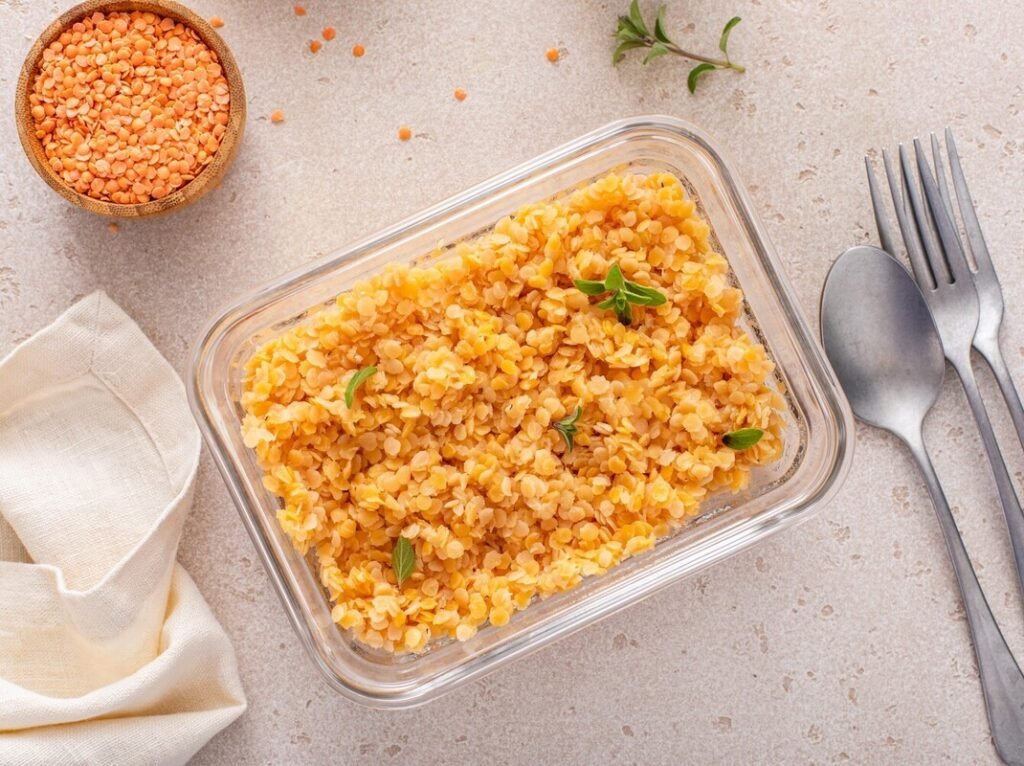
- Cook different lentil types for different textures: brown/green for hearty salads, Puy (French) for firm bite, and red/orange for purees and soups.
- For extra flavor, swap half the water for vegetable or chicken broth, and add a bay leaf or a sprig of thyme while simmering; remove before storing.
- Freeze portions in silicone-lined or freezer-safe containers for up to 3 months; thaw overnight in the fridge before reheating.
- To reduce gas-producing oligosaccharides, rinse lentils well and drain; adding a piece of kombu seaweed while cooking can also improve digestibility.
Batch-cooking lentils is one of the most efficient ways to add plant-based protein to your week without extra hassle. Pair your prepared lentils with quick sides and sauces to build a variety of meals in minutes, and invest in quality storage containers to make the convenience last. For compact, space-saving options consider checking collapsible containers as well: Best Collapsible Food Storage Containers.
Ready to start? Below you’ll find a straightforward ingredients list and step-by-step instructions to make a flexible batch of lentils and store them for the week.