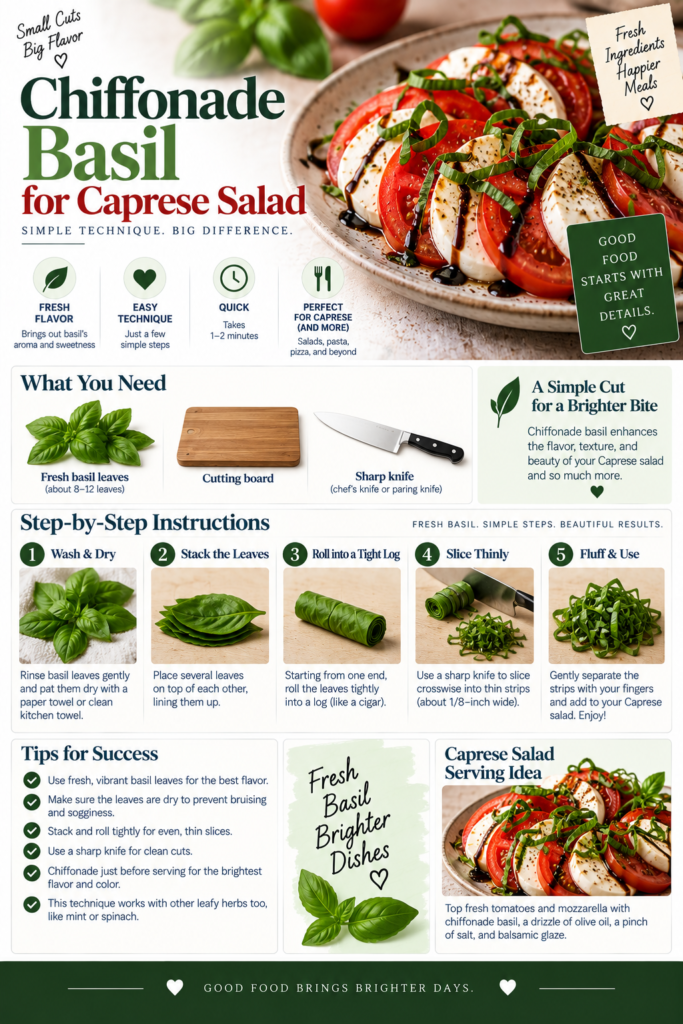
Chiffonade Basil for Caprese Salad
A perfect Caprese salad is all about balance: ripe tomatoes, creamy mozzarella, a drizzle of olive oil and balsamic, flaky salt, and the bright, aromatic lift of fresh basil. Chiffonade—thin ribbon-like slices of basil—turns ordinary leaves into a uniform, delicate garnish that distributes flavor evenly across every bite.
This article walks you through the chiffonade technique step by step, explains how to choose the right knife and supporting tools, and offers pro tips to keep your basil bright and fragrant. Whether you’re plating a weeknight salad or preparing an elegant starter for guests, mastering chiffonade elevates presentation and flavor with minimal effort.
Why chiffonade works for Caprese
Chiffonade creates long, fine ribbons instead of torn or roughly chopped pieces. That makes the basil easier to eat with other components and helps the herb release its aromatic oils without bruising the leaves. Because Caprese is a fresh, uncooked salad, the way you handle basil directly affects aroma and appearance—thin, even ribbons look refined and taste fresher.
Beyond aesthetics, chiffonade helps portion basil evenly. Rather than a clump of torn leaves in one spot and nothing in another, the chiffonade distributes basil through the salad so every forkful gets a balanced hit of herb.
Choosing the right equipment
A clean, sharp chef’s knife is the most important tool for a clean chiffonade. The motion is a simple rocking slice, and a dull blade will bruise basil, tearing cells and turning leaves dark and limp. If you’re shopping for a reliable chef’s knife, start with a well-balanced 8″ Chef Knife designed for versatility and comfortable control: find chef knives on Amazon.
Other helpful items: a wooden or plastic cutting board with a non-slip surface and a bench scraper or spatula for transferring ribbons without crushing them. If you care for your blades, consider a quality sharpener or honing steel; we recommend reading our buying guide on Best Knife Sharpeners for Home Use and Best Honing Steels for Knife Maintenance to keep your knife slicing like new.
For convenience, here are a couple of useful Amazon tools if you want to shop quickly: a sturdy wooden cutting board (Wooden Cutting Boards on Amazon) and a compact knife sharpener (Knife Sharpeners on Amazon).
Technique overview (what you’ll learn)
- How to prepare basil leaves to minimize bruising and moisture.
- How to stack and roll leaves for consistent ribbons.
- How to use a chef’s knife with a controlled rocking motion to slice thinly.
- How to handle and plate chiffonade without crushing it.
Below the fold you’ll find a step-by-step recipe for chiffonade basil and assembling a classic Caprese salad. The instructions are simple, but the little details—knife angle, leaf dryness, and transfer technique—make a big difference.
What makes a great chiffonade
Three things matter most: leaf condition, knife sharpness, and your rolling technique. Choose fresh, young basil leaves that are vibrant green with no brown spots. Pat them dry—any surface moisture will cause clumping and make thin slicing tricky. Keep your knife honed (short maintenance before use helps), and roll leaves into a tight cylinder so your slices are even.
Presentation tips for Caprese
When arranging a Caprese salad, alternate tomato and mozzarella slices in a tidy row or circle, evenly scatter your chiffonade on top, then finish with a high-quality extra virgin olive oil, a few drops of balsamic glaze, a sprinkle of flaky sea salt, and freshly ground black pepper. The chiffonade should sit lightly atop the salad, not be pressed into the cheese or tomatoes—this preserves the fragrance.
Care and maintenance: knife upkeep
Because a sharp knife is crucial for chiffonade, invest a minute before cooking to check the edge. A quick pass on a honing steel straightens the blade and improves slice quality. For more guidance on keeping knives in top condition, consult our Best Honing Steels for Knife Maintenance guide and the Best Knife Sharpeners for Home Use buying guide.
Tips and variations
Here are a few practical tips and creative variations to try:
- Tip: Work with basil at room temperature—cold leaves are more brittle and can tear when rolled and sliced.
- Tip: If leaves are large and thick, remove the rib (stem) before stacking to keep ribbons delicate.
- Variation: Mix basil chiffonade with a small amount of torn mint or oregano for a multi-herb finish that pairs well with heirloom tomatoes.
- Variation: For a brighter presentation, chiffonade basil and immediately toss with a tiny splash of olive oil to prevent wilting before plating.
Final thoughts
Chiffonade is a small technique with a big payoff. It improves flavor distribution, elevates the look of a simple Caprese salad, and is fast to learn. With a sharp chef’s knife, a steady hand, and a few minutes of practice, you can make restaurant-quality herb ribbons that will impress family and guests.
Ready to get slicing? Scroll down to the instructions section to follow the exact steps and timing for chiffonade basil and the classic Caprese assembly.