
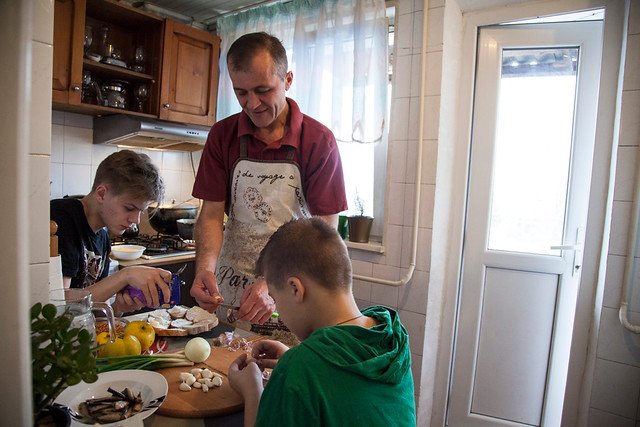
Perfect Brunoise Vegetable Dice

Master the classic brunoise cut with this step-by-step guide for perfectly uniform vegetable dice—ideal for garnishes, sauces, and salads. Learn tool choices, technique, and storage tips to work faster and safer with a chef's knife.

25 min Prep Time
4 Servings
Medium Difficulty

Ingredients

Servings:
4
Nutrition (per serving)
Calories 40 kcal
Protein 1 g
Fat 0.2 g
Carbohydrates 9 g
Fiber 2 g
💾 Storage

Store brunoise-cut vegetables in an airtight container in the refrigerator for up to 2 days. If you need to keep them longer, blanch firmer vegetables like carrots briefly, shock in ice water, dry well, and freeze flat in a single layer on a baking sheet before transferring to a freezer bag for up to 3 months. Thaw in the refrigerator and use promptly.

🍳

Best Made With: Chef's Knife

Choose a chef's knife with a comfortable balance and a thin, sharp edge for precise thin slicing and consistent brunoise.

See Our Top Chef's Knife Picks →

Perfect Brunoise Vegetable Dice

Brunoise is a tiny, precise dice—traditionally 1 to 2 millimeters square—that elevates the look and texture of sauces, garnishes, and composed salads. When vegetables are cut uniformly at this small scale they cook evenly, release flavor consistently, and give dishes an elegant, refined finish. For home cooks, learning brunoise is less about speed and more about control and the right tools.

This recipe-style guide walks you through choosing the right knife and board, prepping vegetables, and executing the cuts with safety and confidence. The technique works best with firm vegetables like carrots, celery, bell peppers, and zucchini; once you master the basic motions you can apply the same principles to softer produce and aromatics.

Why this method works

Breaking the cutting process into a few predictable steps—square, baton, julienne, dice—reduces the mental load and improves uniformity. Using a well-balanced chef’s knife gives you reliable blade control for the thin slices needed in a brunoise. The result is consistent pieces that cook at the same rate and create a refined texture and appearance that store-bought mixes rarely match.

Choosing the right equipment

For brunoise, the most important tool is a sharp, comfortable chef’s knife. A 7- to 8-inch chef’s knife with a fine, straight edge provides the control and blade length needed to make long, even slices for batons and juliennes. If you prefer a dedicated vegetable blade, consider a Nakiri-style knife which is designed for efficient vegetable work and has a flat profile that meets boards cleanly.

We recommend investing in a high-quality chef’s knife and a stable cutting board. Shop examples on Amazon here: search for chef’s knife, or explore Nakiri options here: search for nakiri knife. For guidance on types of blades and what suits vegetable prep, check our buying guide to Best Nakiri Knives for Vegetables and our overview of larger slicing knives in Best Slicing and Carving Knives.

A few other helpful tools: a heavy, flat cutting board (end-grain boards protect blade edges), a bench scraper to move small dice, and a kitchen towel to steady the board. If you don’t have a knife you like yet, browse options via the affiliate links above to compare weight, steel type, and handle comfort.

How to use this guide

Follow the instructions below to take your vegetables from whole to tiny brunoise dice. This guide focuses on safety, consistent measurements, and the repeating motions that will help you work faster with practice. The structured steps replicate the sequence professional kitchens use: trim and square, cut batons, cut julienne, then turn and dice.

Tips & Variations

  • Use consistent thickness when slicing: aim for uniform batons to get even julienne and dice. A ruler or visual reference can help during practice.
  • If vegetables are slippery, chill them briefly in the fridge for firmer texture before cutting. For very small dice, work in short bursts to maintain control and freshness.
  • For softer vegetables like tomatoes, remove seeds and excess moisture before attempting brunoise; use a slightly larger dice if needed.
  • Practice with a carrot or firm cucumber first. As your knife control improves, try mixing colors for a visually striking garnish.

Below you will find the ingredient list and the step-by-step instructions to follow. Nutrition and storage information are included in the recipe metadata.
Instructions

1

Prepare your station

Wash, dry, and arrange your vegetables on a stable cutting board. Ensure your chef's knife is sharp and within reach. Place a damp kitchen towel under the cutting board to prevent slipping. Prepare a small bowl to hold the diced vegetables and a bench scraper to transfer them.

💡 Pro tip: A sharp knife is safer and more efficient; hone or sharpen before starting if needed.
2

Square and trim the vegetables

Trim the ends off vegetables and cut away any uneven sides to form a flat surface. For carrots and celery, cut into lengths about 2 to 3 inches long for manageable batons. For onion, halve and remove the papery skin, then cut a small slice to create a flat face.

💡 Pro tip: Creating at least one flat surface prevents rolling and improves safety.
3

Create batons (small sticks)

Holding the vegetable flat-side down, slice it lengthwise into slabs of equal thickness (aim for about 2 to 3 mm for a fine brunoise). Stack the slabs and slice lengthwise again to produce batons (sticks) roughly 2–3 mm wide. Keep the fingers of your guiding hand curled to protect fingertips.

💡 Pro tip: Make each slab the same thickness—consistency here determines the final dice size.
4

Cut the julienne

Line up the batons and slice them lengthwise into thin matchsticks (julienne). For brunoise, these should be the same width as the batons, producing very thin, even strips. Work slowly rather than forcing thin slices; let the knife do the work with a smooth slicing motion.

💡 Pro tip: Use the full length of the blade with a gentle forward-and-back motion for smoother slices.
5

Turn and dice to brunoise

Gather a small handful of julienne strips, align them, and using a rocking motion with the knife, cut across the strips at 1 to 2 mm intervals to produce tiny cubes. Move your guiding hand backward as you slice to maintain even spacing and protect fingertips. Rotate only when necessary to keep the pile stable.

💡 Pro tip: If the strips are slipping, press a fingertip lightly on top of the pile (away from the blade) to stabilize while cutting.
6

Fine-tune and finish

Inspect the dice and re-slice any odd pieces for uniformity. Transfer the brunoise to your serving bowl or pan using a bench scraper. Season lightly with salt or toss with a little oil or citrus for use as a raw garnish. If using in a sauce or sauté, add toward the end of cooking to preserve texture and color.

💡 Pro tip: For an ultra-fine brunoise, you can square larger dice with the flat side of the knife and re-julienne, then dice again.
7

Clean up and maintenance

Rinse and dry the knife immediately after use to protect the blade. Wipe the cutting board, and store the knife in a block or on a magnetic strip. Regularly hone the knife to maintain a keen edge for precise cuts.

💡 Pro tip: Avoid dishwasher use for high-quality knives; hand-wash and dry promptly.

More to Cook

You Might Also Like

Meal Prep Chicken and Rice for the Week

Make weekday lunches easy with this simple, flavorful Meal Prep Chicken and Rice recipe—built for batch cooking and packed into ready-to-go containers. Learn equipment tips, storage advice, and variations to keep your meals fresh and delicious all week.

View Recipe →

Stay in the loop

Get the Best Kitchen Picks Delivered

New buying guides, honest reviews, and kitchen-tested recipes — straight to your inbox. No spam, ever.